
Temple Technology · Part 3 of 4
The Three Wise Men: The Glandular Triad of Higher Perception
The Three Wise Men become an inner map: attention, emotional stability, and sensory integration working together as the upper room of perception.
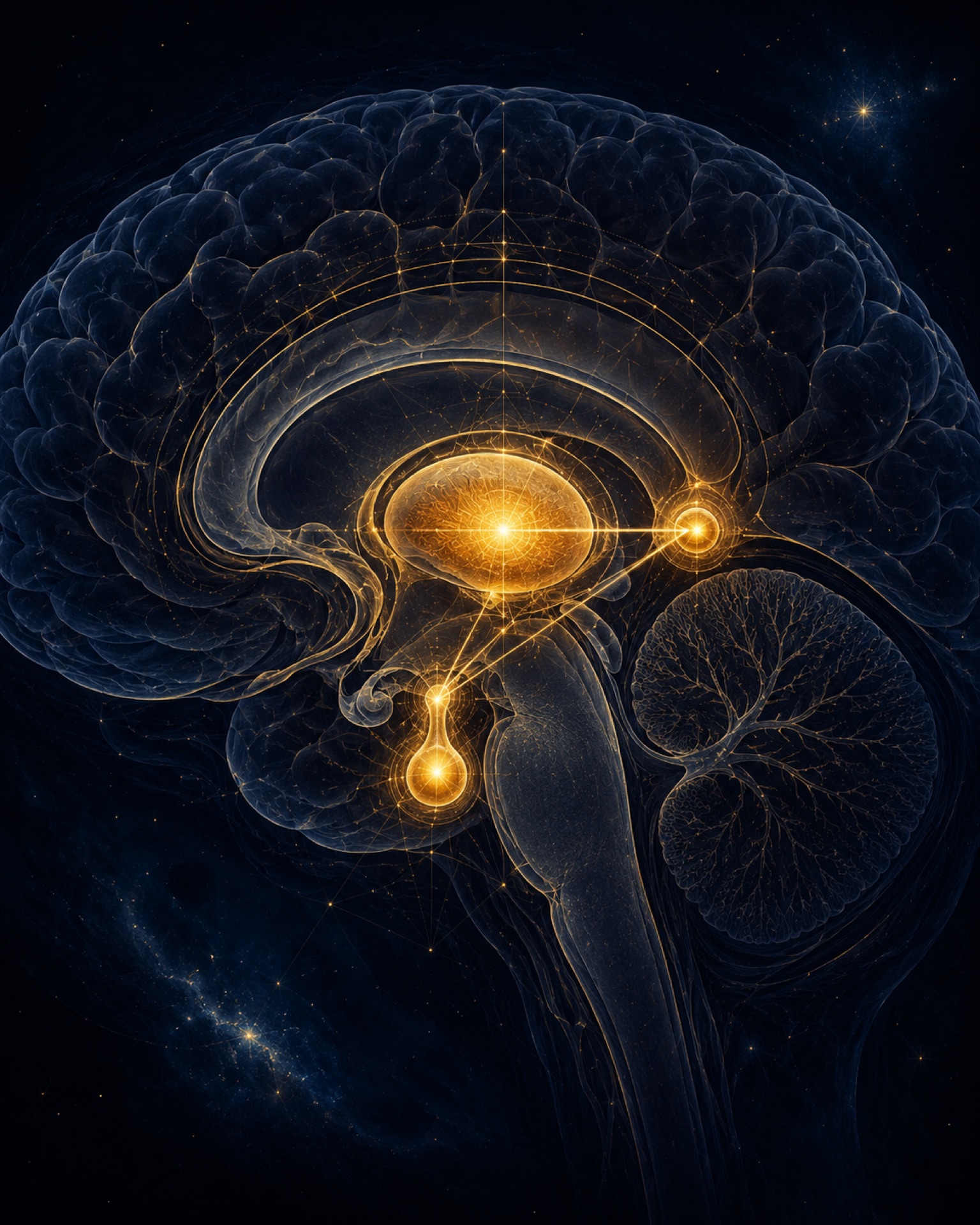
The Inner Re-Interpretation of the Magi
The ancient image of the Magi following a star can be read as an inner allegory. In Temple Technology, the journey becomes a map of higher perception: the alignment of attention, emotional resonance, and sensory integration.
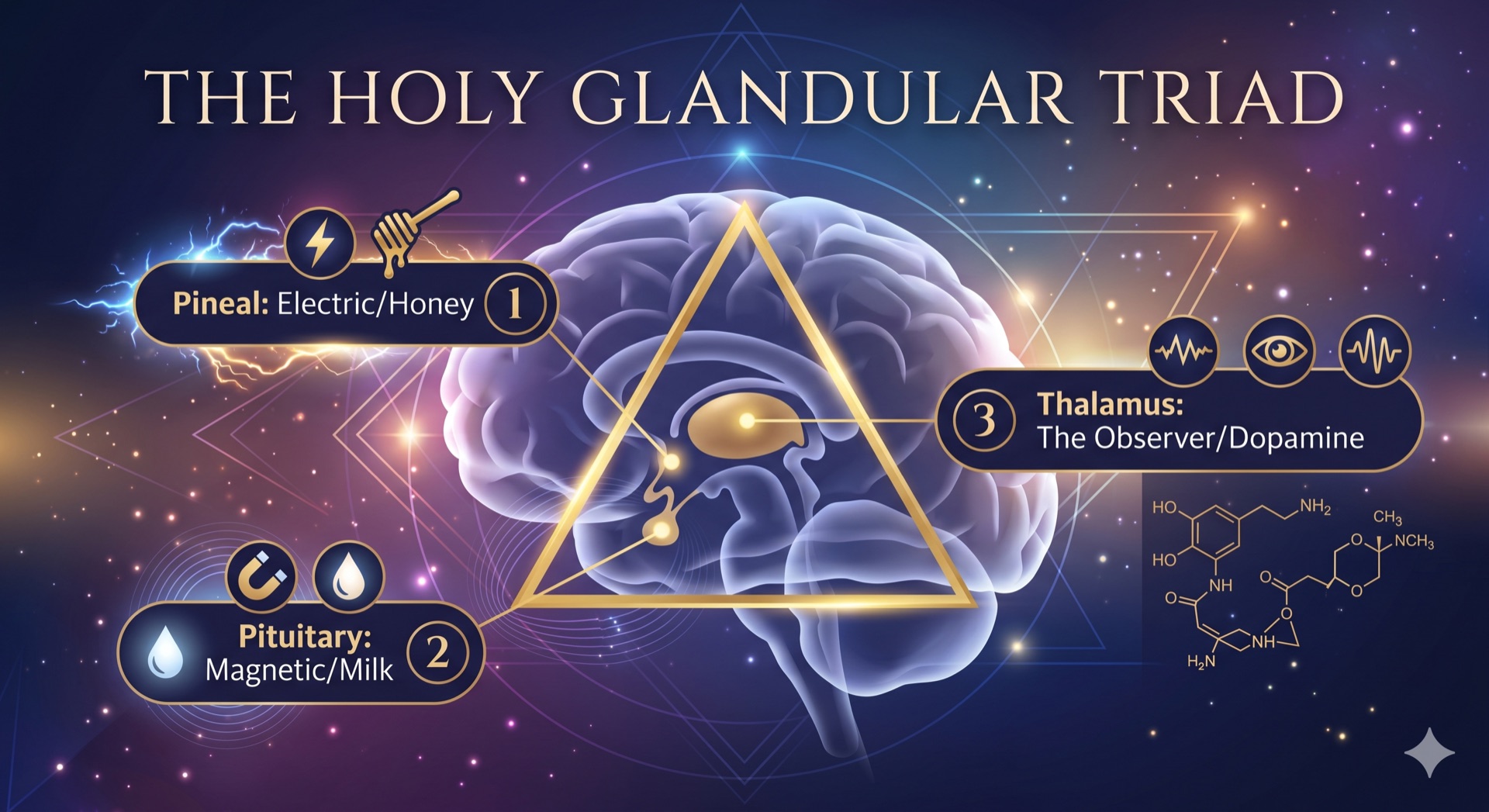
The Pineal, Pituitary, and Thalamus are treated here as symbolic anchors for this triad. The goal is not to reduce mystery to anatomy, but to use the body as a sacred language for the work of consciousness.
The Pineal: Electrical Attention
The Pineal is framed as the electrical principle: the spark of attention that interrupts autopilot. In an age of predatory distraction, attention is life-force. Where attention is placed, energy follows.
This principle acts as a firewall against scattered perception. It asks: what star are you following? What signal is worth your life-force? What cheap loop is stealing the fire that belongs to purpose?
Spirit Fire Gateway
Curiosity, pattern breaks, and inner stillness ignite the system out of habitual thinking.
Attention Firewall
The practitioner guards focus from compulsive loops and returns attention to the chosen aim.
The Pituitary: Magnetic Stability
If the Pineal is spark, the Pituitary is magnetic regulation. It represents the emotional yes, the inner stability that allows expansion to feel safe rather than threatening.
Without emotional stability, vision collapses into anxiety. The self may receive an idea, then reject it because the body does not feel safe enough to grow. The Pituitary principle asks the nervous system to become a hospitable environment for purpose.
Emotional Resonance
The body learns to feel safe with creative expansion, leadership, visibility, and disciplined change.
Magnetic Firewall
Identity becomes anchored internally rather than defined by external validation.
The Thalamus: The Throne of Perception
The Thalamus is framed as the throne: the integrating centre where sensory input becomes meaningful experience. It determines whether perception becomes compulsion or command.
In compulsive loops, sensory input is routed toward immediate relief: scroll, react, purchase, argue, escape. In sovereign loops, input is integrated into creative imagination, discernment, and deliberate action.
The throne does not simply receive information. It governs the meaning given to information.
Sitting for Ideas in the Upper Room
Stillness is the primary technology for receiving insight. Through stillness, the noise of the attention economy lowers and the inner triad can begin to work as one.
1. Identify and Neutralise
Sit upright. Notice intrusive thoughts, fear, doubt, or distraction. Neutralise them through breath and the power of pause.
2. Focus the Inner Fire
Bring awareness to the centre of the head. Visualise the upper room as a quiet field of electrical and magnetic balance.
3. Nurture the Creative Faculty
Do not force linear thinking. Hold expectant stillness. Treat hunches as data points rather than commands.
4. Receive and Record
After the sitting, write down ideas without judgement. Recording gives the insight enough structure to become useful.
Upper Room Reflection
- What is currently stealing my attention?
- What idea keeps returning when I become still?
- Where does my body need emotional safety before it can expand?
- What sensory input am I interpreting through fear?
- What insight needs to be recorded and tested through action?