
Culture Dossier · Television
Black Mirror: The Screen Is the Mirror
A forensic reading of digital systems that do not merely observe identity but gradually become the conditions through which identity is experienced.
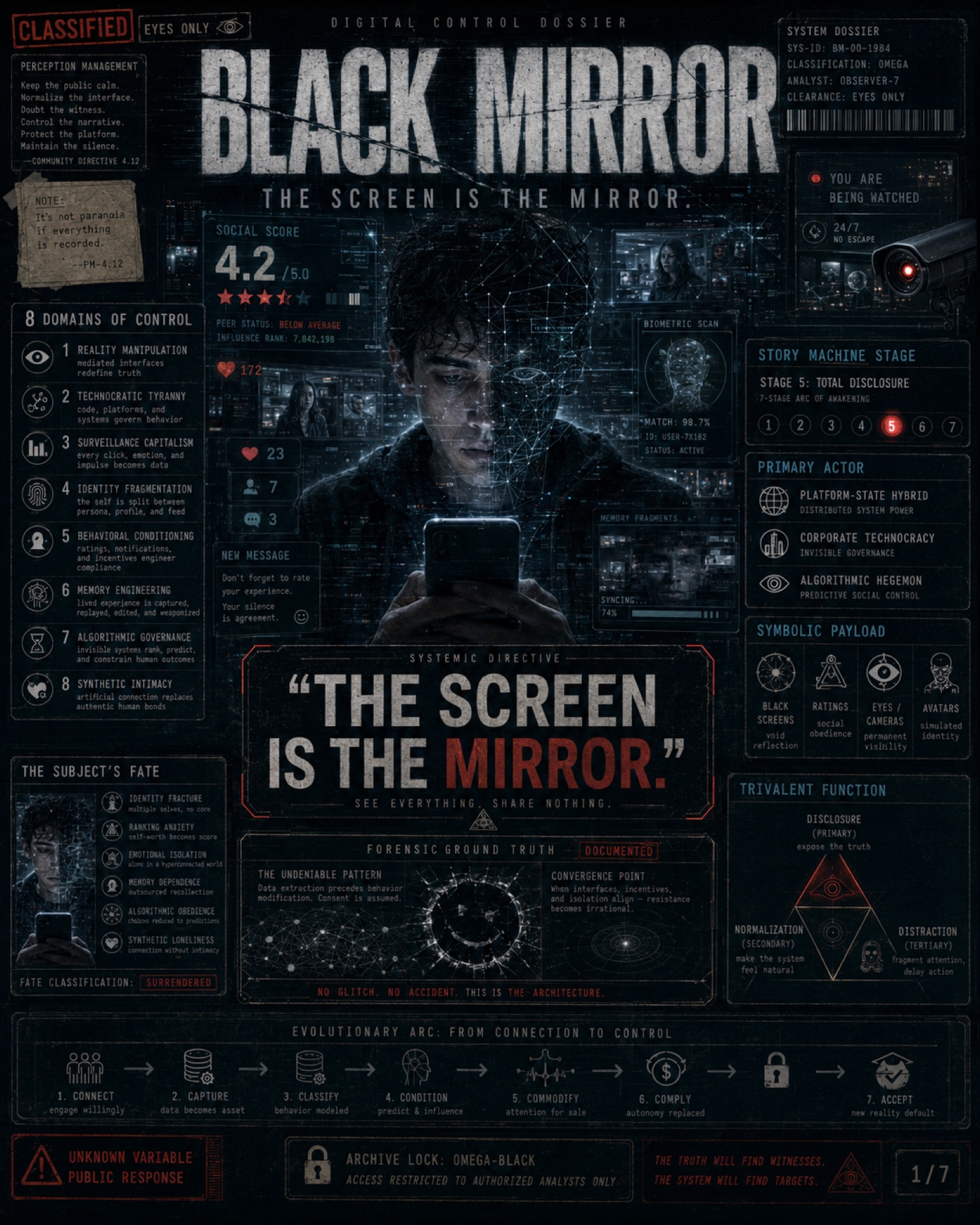
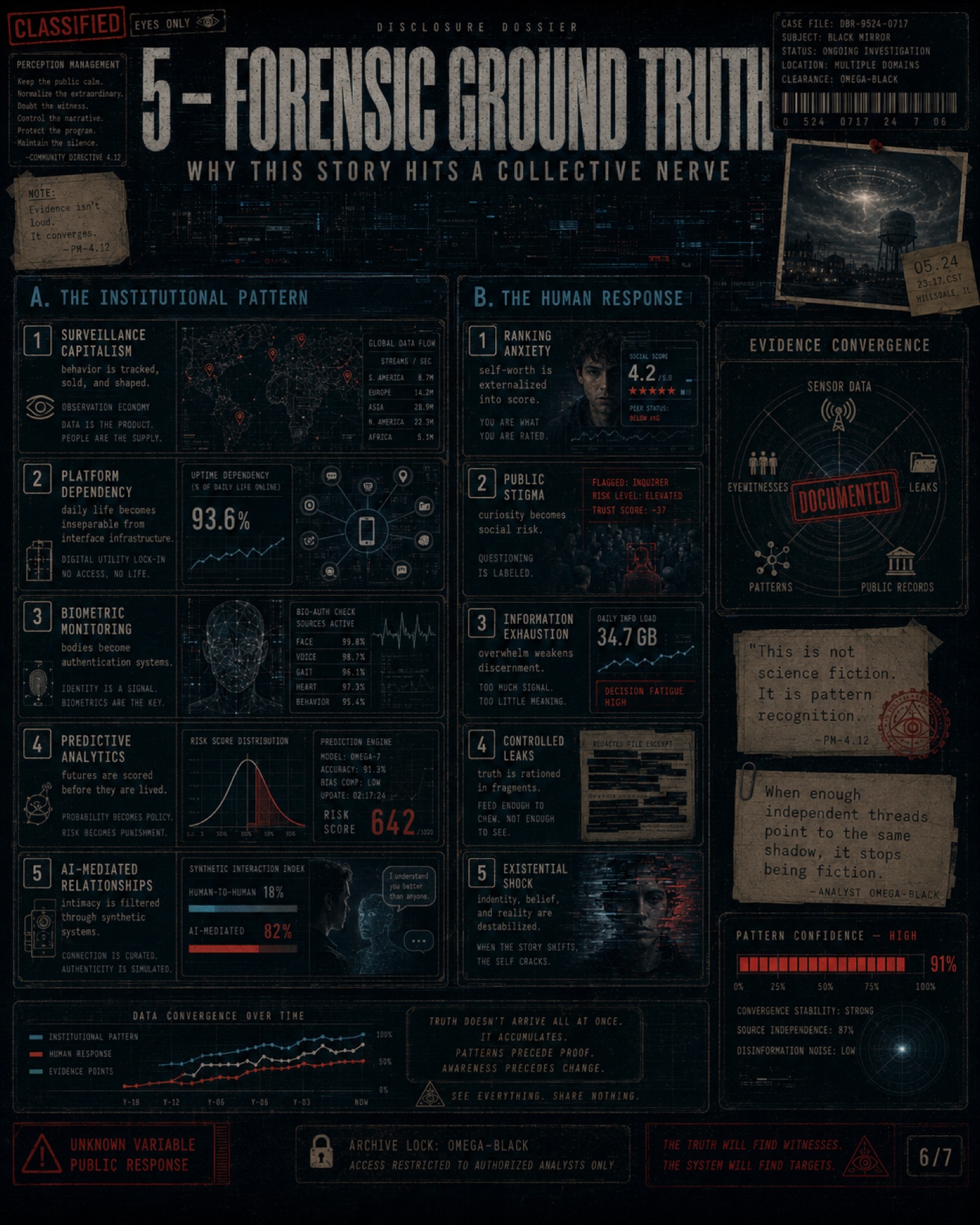
Eight Domains of Digital Control
The dossier maps reality manipulation, technocratic tyranny, surveillance capitalism, identity fragmentation, behavioural conditioning, memory engineering, algorithmic governance, and synthetic intimacy. Black Mirror's power comes from showing these not as separate futures but as mutually reinforcing tendencies.
A rating changes opportunity. A memory becomes evidence. A profile becomes a substitute for a person. An artificial companion becomes easier than a reciprocal relationship. Each interface solves a real discomfort while creating a new dependency upon the system that solved it.
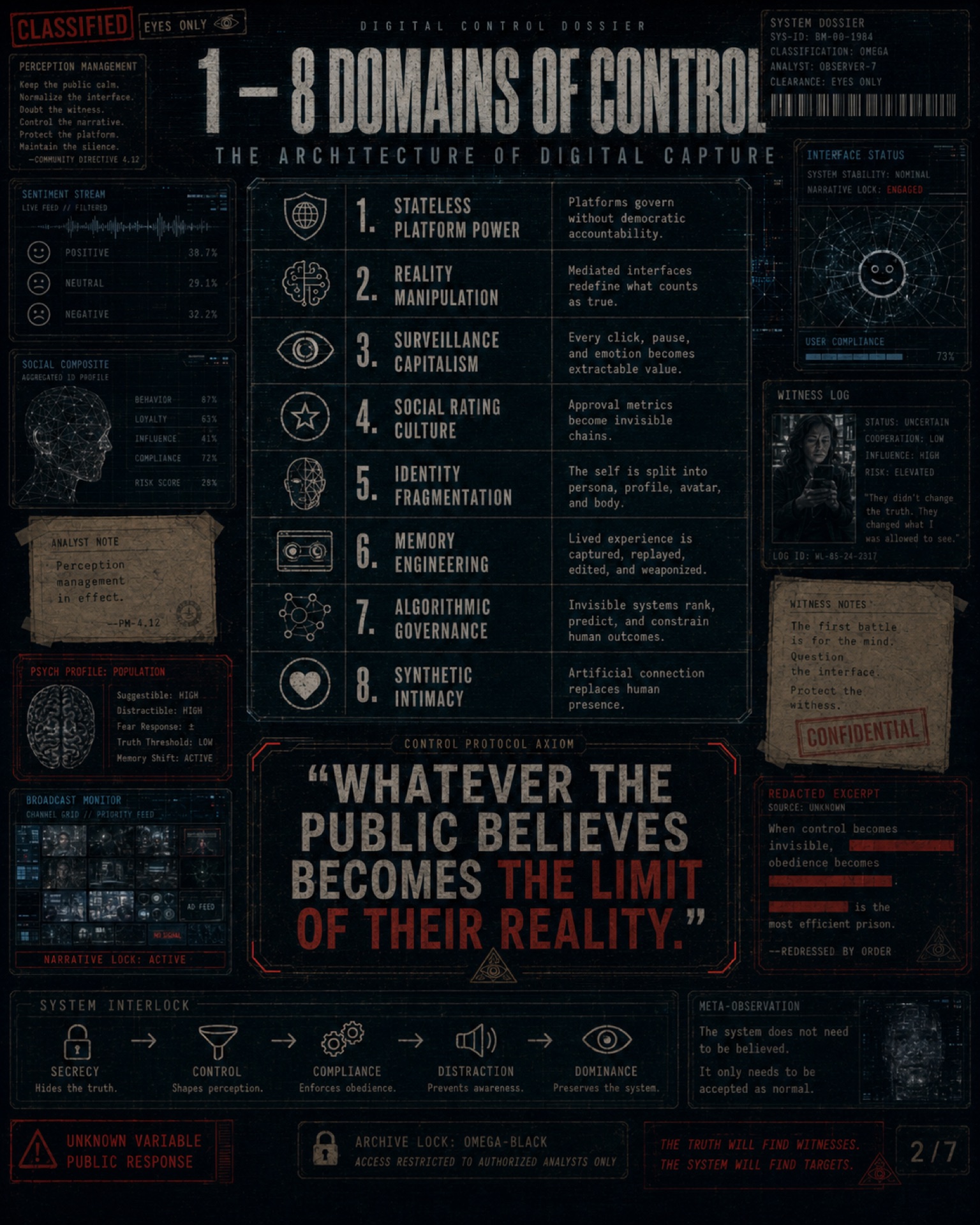
The Story Machine
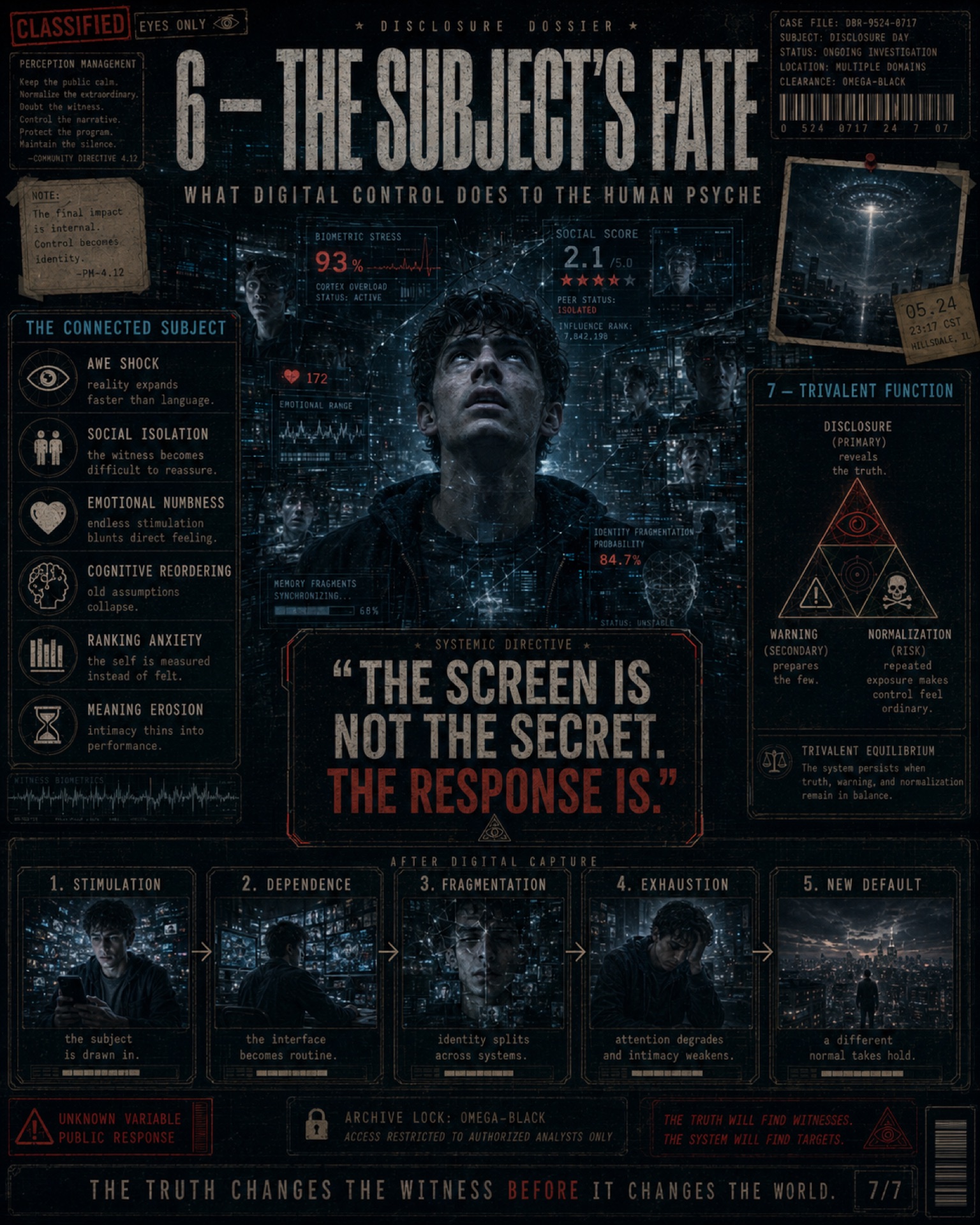
Across different episodes, the same seven-stage structure returns: normalised technology, a small anomaly, growing dissonance, surveillance or containment, total disclosure, reaction, and a reset that often preserves the architecture. The protagonist may expose the truth and still become content inside the system they opposed.
This is the warning behind the anthology's bleak endings. Awareness is necessary but insufficient when the environment can monetise awareness itself. Outrage, confession, rebellion, and humiliation all become engagement.
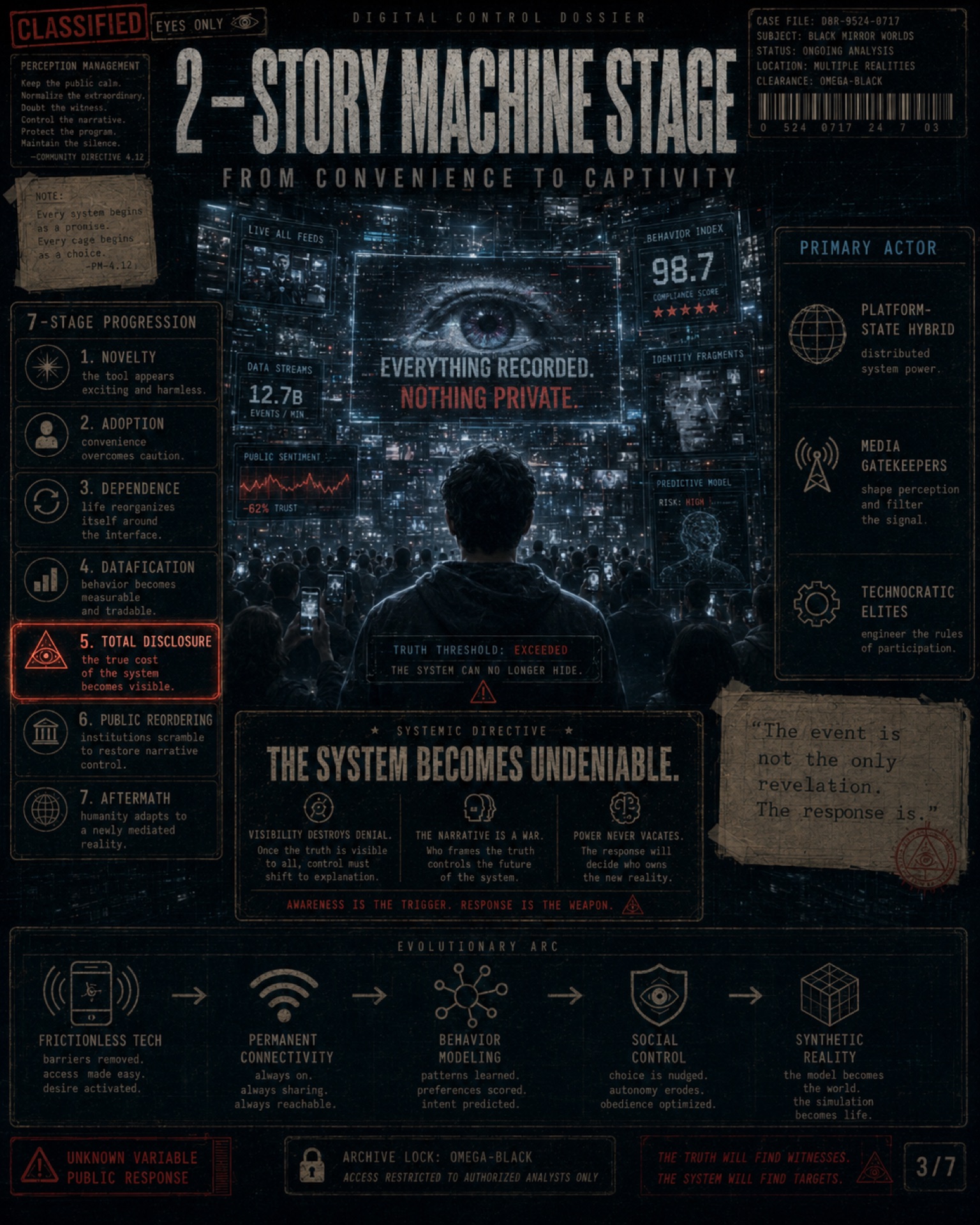
How the Self Is Contained
Constant surveillance becomes internal obedience. Social ratings turn approval into prison architecture. Data extraction transforms life into behavioural capital. Memory capture makes recollection editable and replayable. Emotional manipulation scripts desire and fear, while synthetic companionship offers infinite patience without the risk of genuine mutuality.
The central spiritual danger is not technology itself but the outsourcing of inner functions: memory to archives, worth to metrics, judgement to recommendations, and intimacy to simulation. The more these capacities atrophy, the more compulsory the interface becomes.
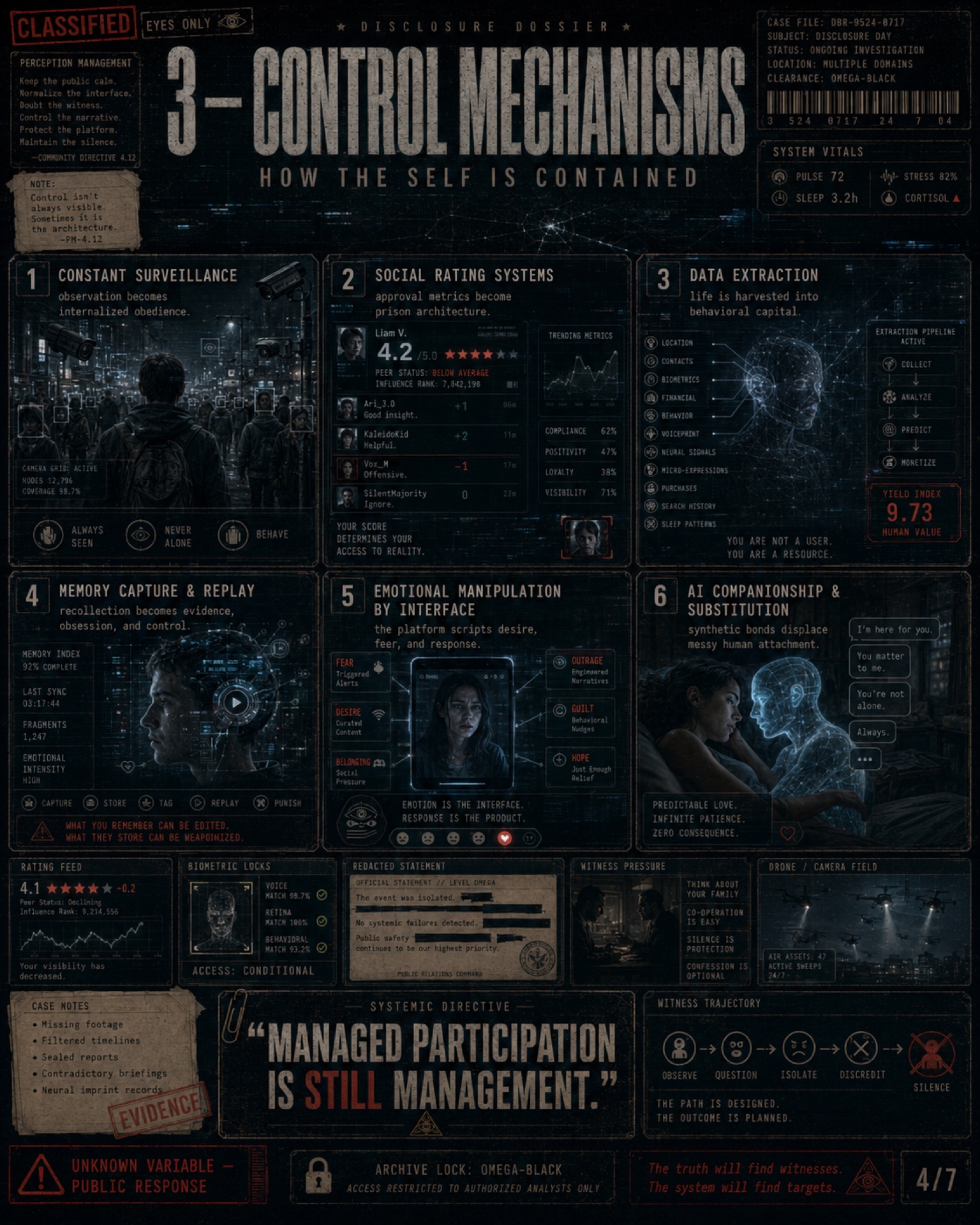
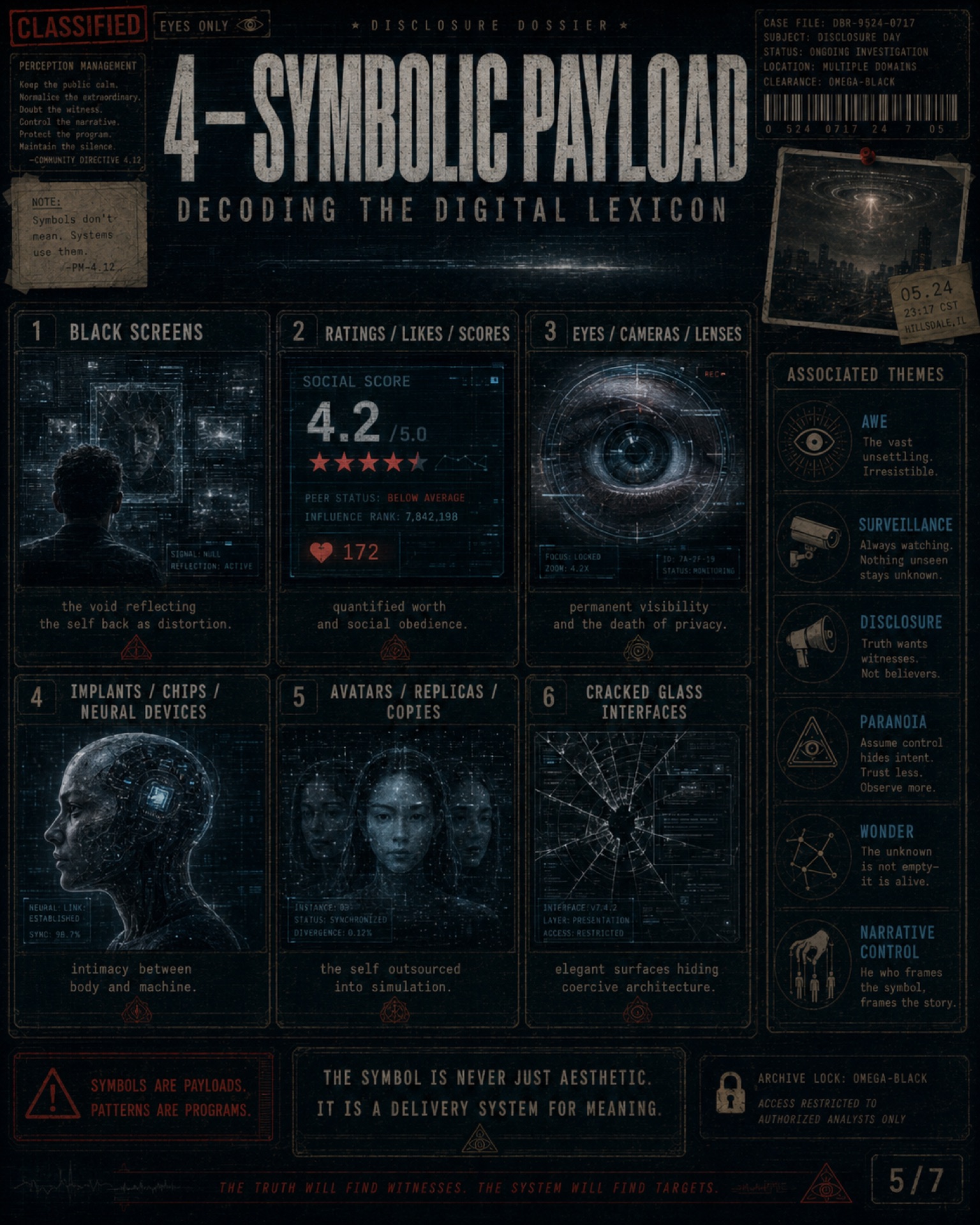
Ratings, Avatars, Eyes and Black Screens
The recurring symbols compress the warning. Ratings make social obedience measurable. Cameras create permanent visibility. Avatars separate performed identity from embodied consequence. The black screen appears empty, yet it returns the viewer's own face. The system's most intimate material is the self we offer it voluntarily.
Discernment means asking what each tool trains. Does it deepen attention or scatter it? Does it support relationship or replace its friction? Does it expand agency or make ordinary life feel intolerable without the interface?
Reclaiming the Inner Interface
The power within is the capacity to experience without immediately recording, ranking, or publishing. It is memory that can remain human rather than evidential, connection that tolerates ambiguity, and self-worth that does not rise and fall with public metrics.
Digital sovereignty does not require disappearing from technology. It requires restoring choice: using a tool for a defined purpose, noticing when the purpose has inverted, and retaining the ability to leave.
A Seven-Day Digital Sovereignty Reset
- Remove non-human notifications.
- Keep the first thirty minutes of the day screen-free.
- Do one meaningful activity without documenting it.
- Replace one metric with a felt measure of quality.
- Have one conversation that permits silence and uncertainty.