
Culture Dossier · Television
Mr Robot: Decoding the Architecture of Illusion
A threat assessment of corporate sovereignty, revolutionary fantasy, psychological fragmentation, and the difficult return to an integrated self.
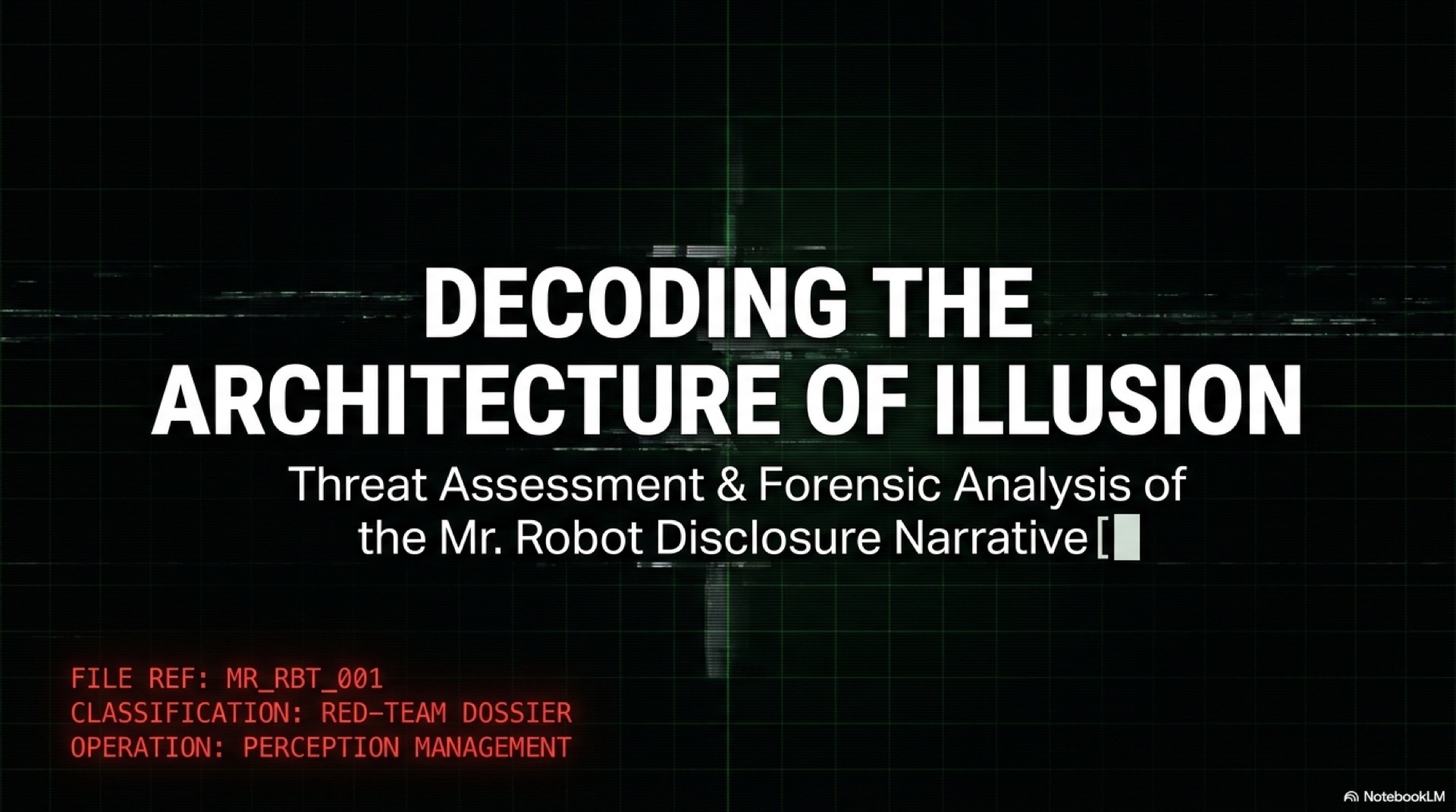
The Hacker as Witness
Elliot sees structures hidden behind friendly interfaces: debt, data, corporate dependency, and the private appetites concealed by respectable identities. His technical skill gives him access to forensic truth, but access does not automatically produce wholeness.
The series complicates the fantasy that seeing through the system makes a person free. Elliot can expose others while remaining opaque to himself. Awakening must therefore move in two directions: outward toward power and inward toward the mind interpreting it.
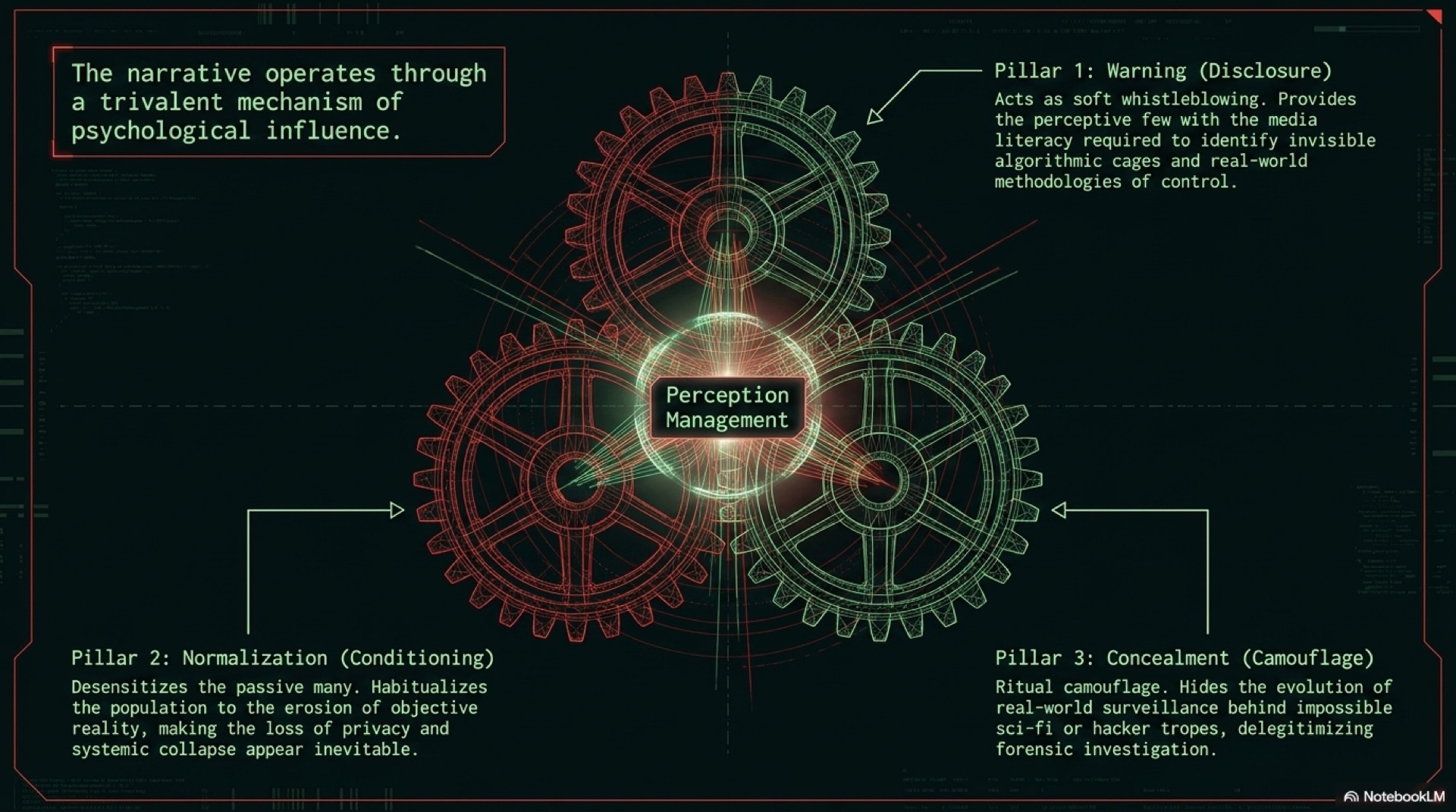
Revolution and the Reset
Five/Nine promises a clean rupture: erase the debt records and return power to ordinary people. Yet the system adapts. Economic chaos creates new dependencies, and the revolution becomes useful to actors with greater resources and longer plans.
This is not an argument against resistance. It is a warning against mistaking destruction for transformation. If the inner logic of domination remains intact, new institutions can inherit the old appetite. Sustainable change requires repair, accountability, and the capacity to build after the spectacle of rupture.
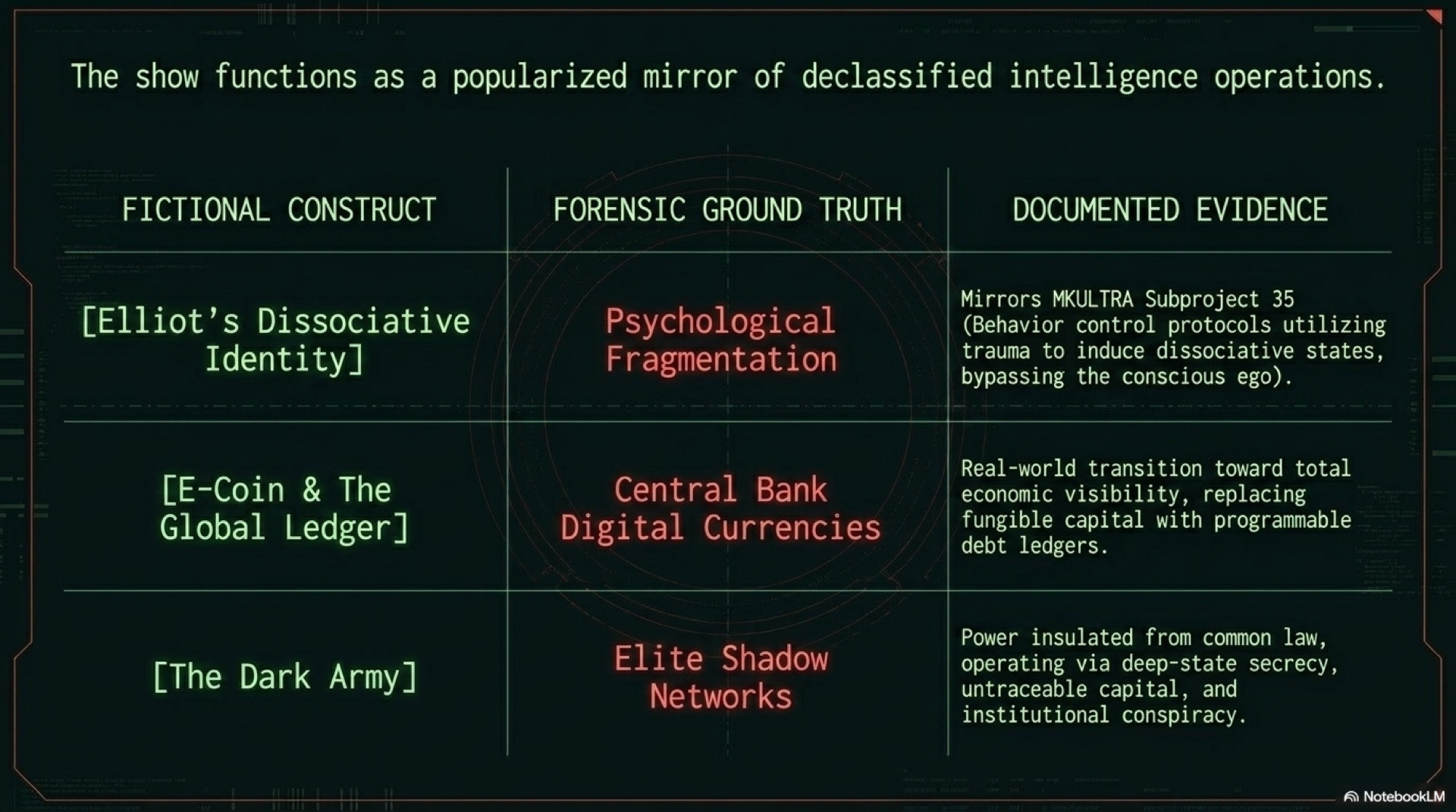
The Fractured Protector
Mr Robot is not merely an unreliable narrator device. He is a protective structure formed around trauma: a self capable of action when the vulnerable self cannot remain present. The protector carries power and also reproduces secrecy, because its existence depends upon keeping pain outside conscious integration.
Inner power is not won by defeating the protector. It is recovered by understanding why the protector appeared, honouring what it kept alive, and relieving it of total command. Integration replaces civil war inside the psyche with a more truthful distribution of responsibility.
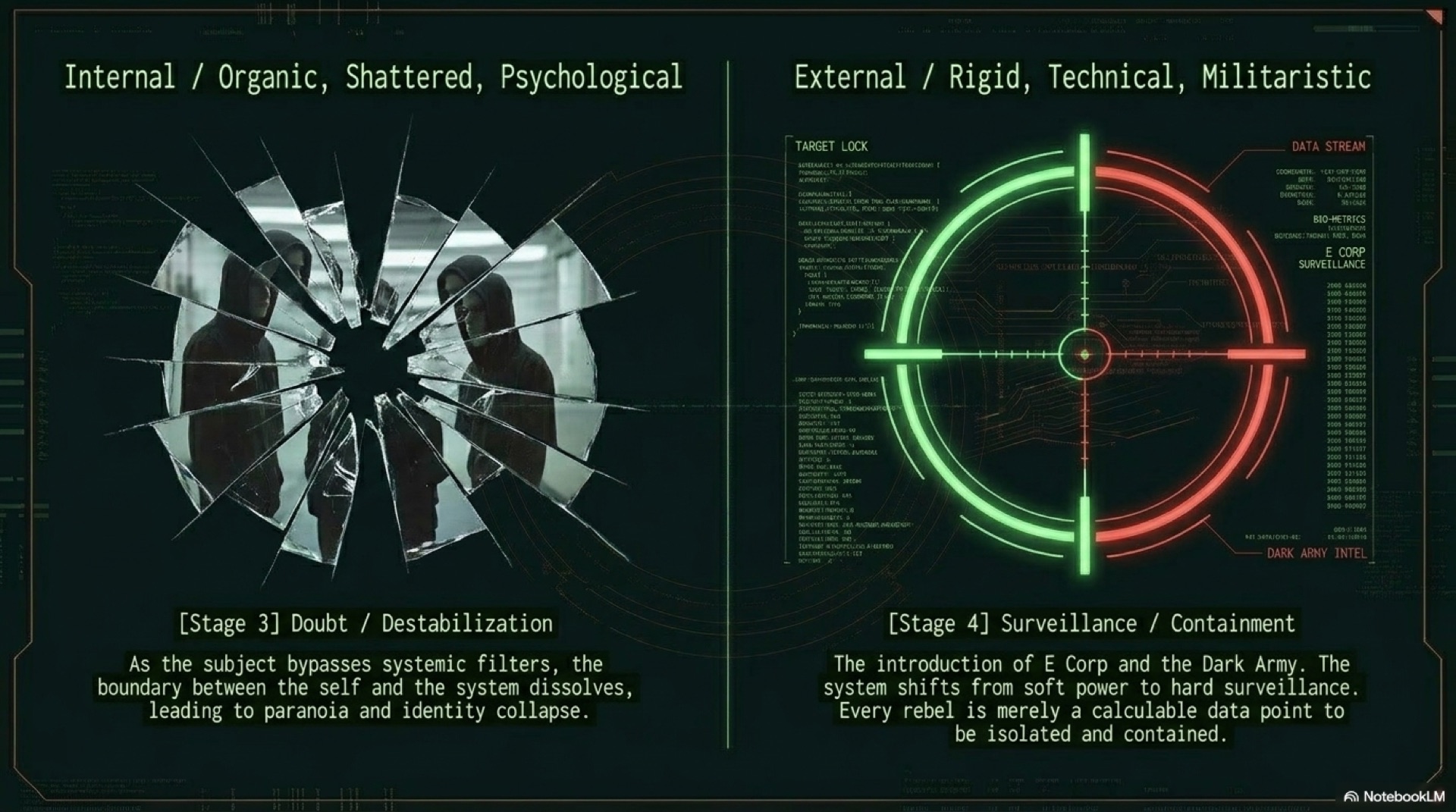
Interfaces, Masks and Empty Rooms
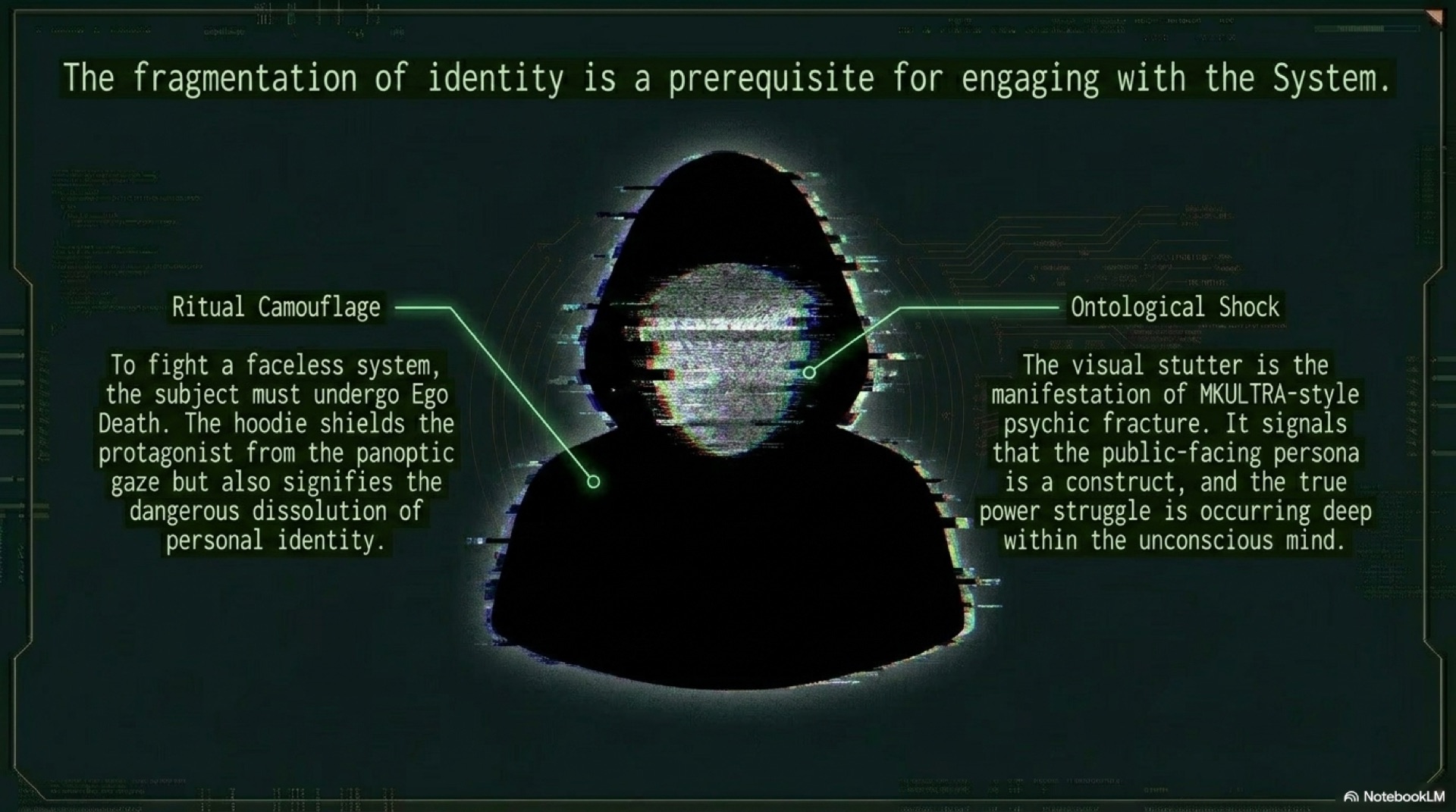
Hoodies, terminals, masks, corporate towers, and empty framing repeatedly separate the visible person from the surrounding system. The interface offers command while hiding the layers that make command possible. The mask grants courage but can become another prison when it is mistaken for the whole self.
The series asks what remains when every persona is understood as a strategy. The answer is not a perfect original identity. It is the capacity to witness all the parts without allowing any single part to impersonate the entirety.
The Power to Integrate
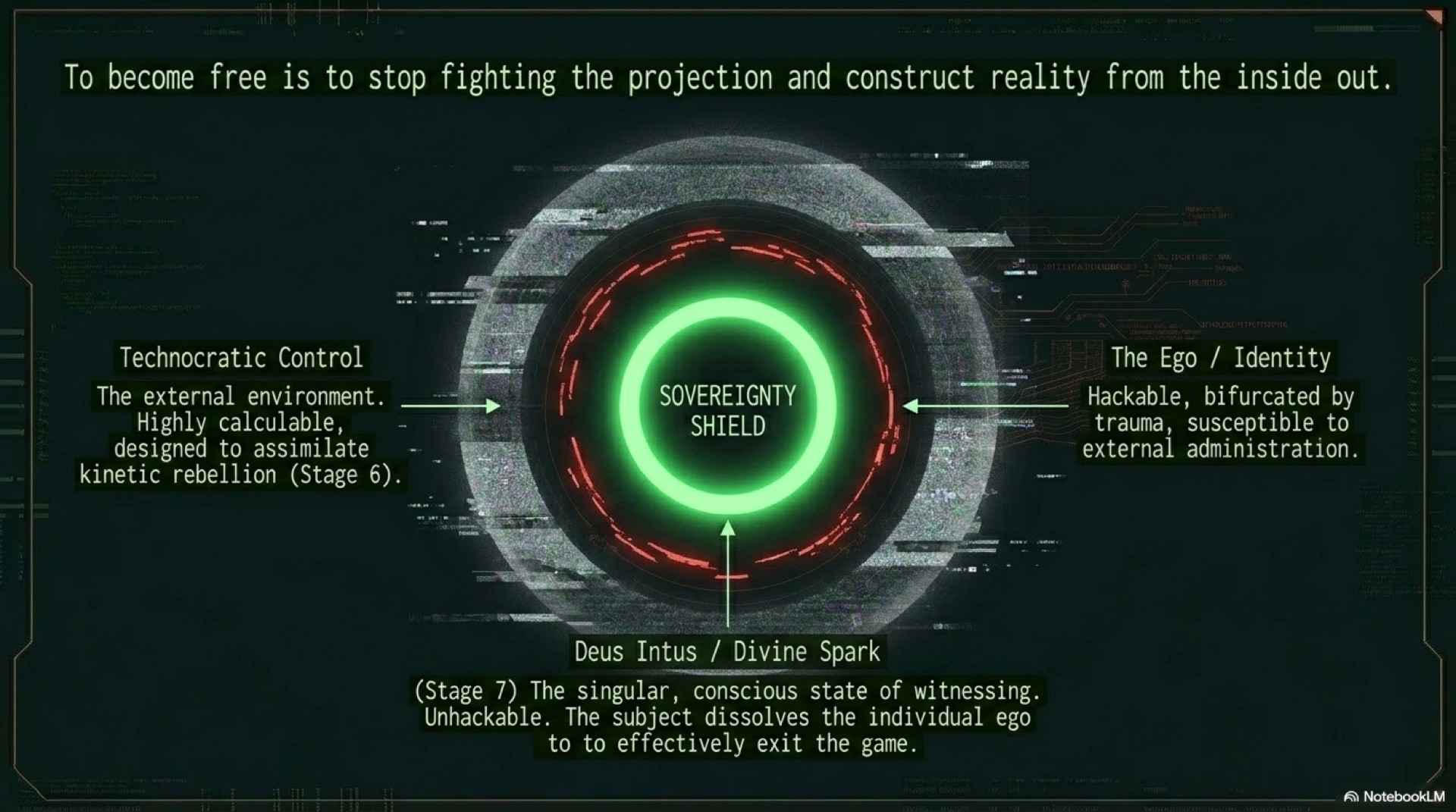
Elliot's final awakening is not the victory of the mastermind. It is the surrender of a dominant alter that believed it had to control the story in order to save the person. The real Elliot can return only when the constructed identity releases the centre.
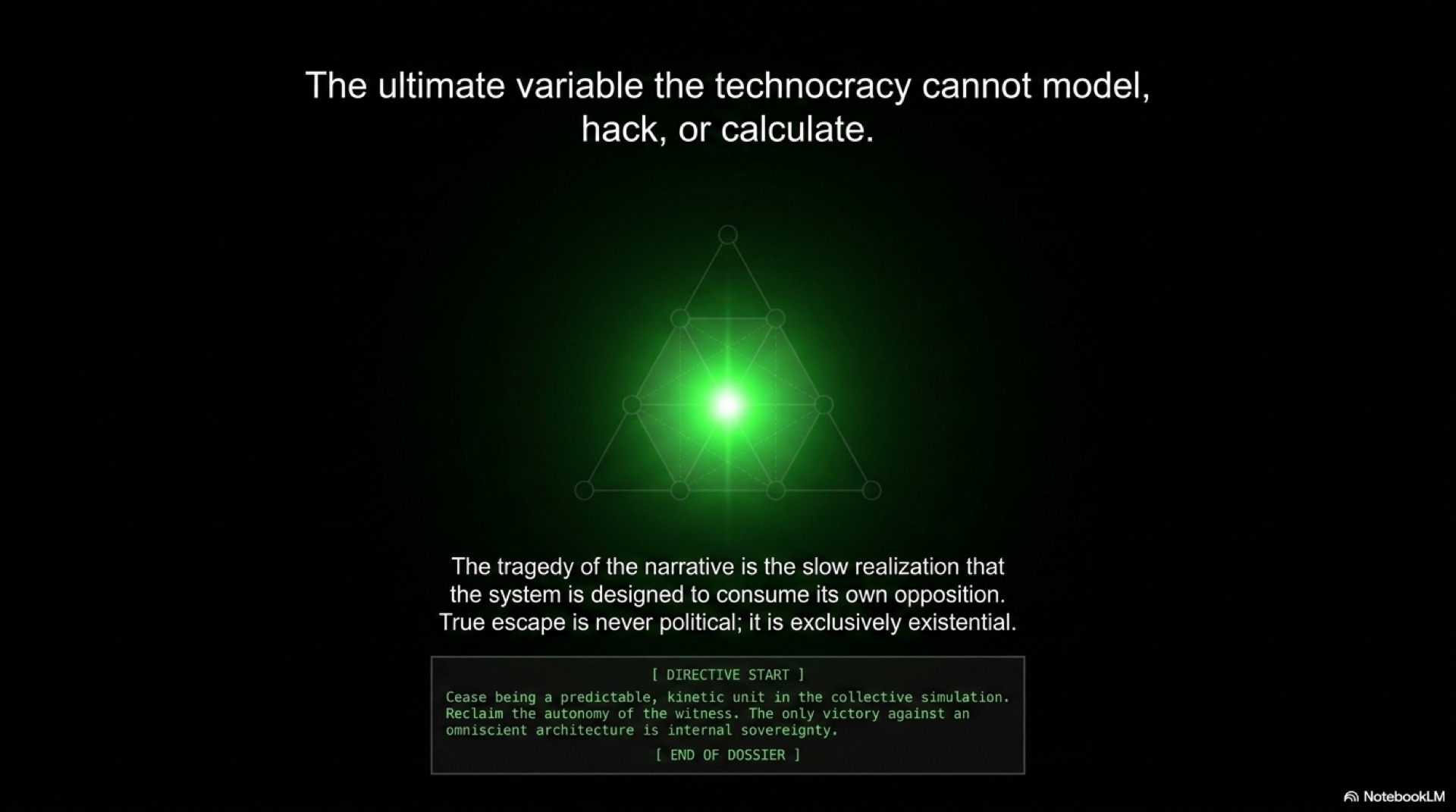
This is a profound Deus Intus lesson. The power within is not always the loudest, most strategic, or most revolutionary voice. Sometimes it is the deeper Self capable of holding grief, contradiction, relationship, and reality without escaping into another total system.
A Practice for Integration
- Name the part of you that takes control under threat.
- Ask what it is protecting and when that protection became necessary.
- Thank the function without surrendering every decision to it.
- Invite body, emotion, reason, and trusted relationship into the next choice.
- Seek professional support when trauma or dissociation makes this work unsafe to hold alone.