
Culture Dossier · Film
Soul: Reclaiming the Divine Spark
A reading of pre-assigned identity, achievement obsession, embodied presence, and the discovery that living is not merely preparation for a purpose.
The Purpose Trap
Joe Gardner has built his identity around one future event: becoming the jazz musician he believes he was meant to be. The dream is genuine, but the self has become fused with the outcome. When he finally receives the opportunity, achievement cannot deliver the total transformation he expected.
The film separates purpose from spark. Purpose may organise meaningful work; spark is the willingness to live. Confusing them turns vocation into a verdict on worth and makes every ordinary moment feel like a waiting room.
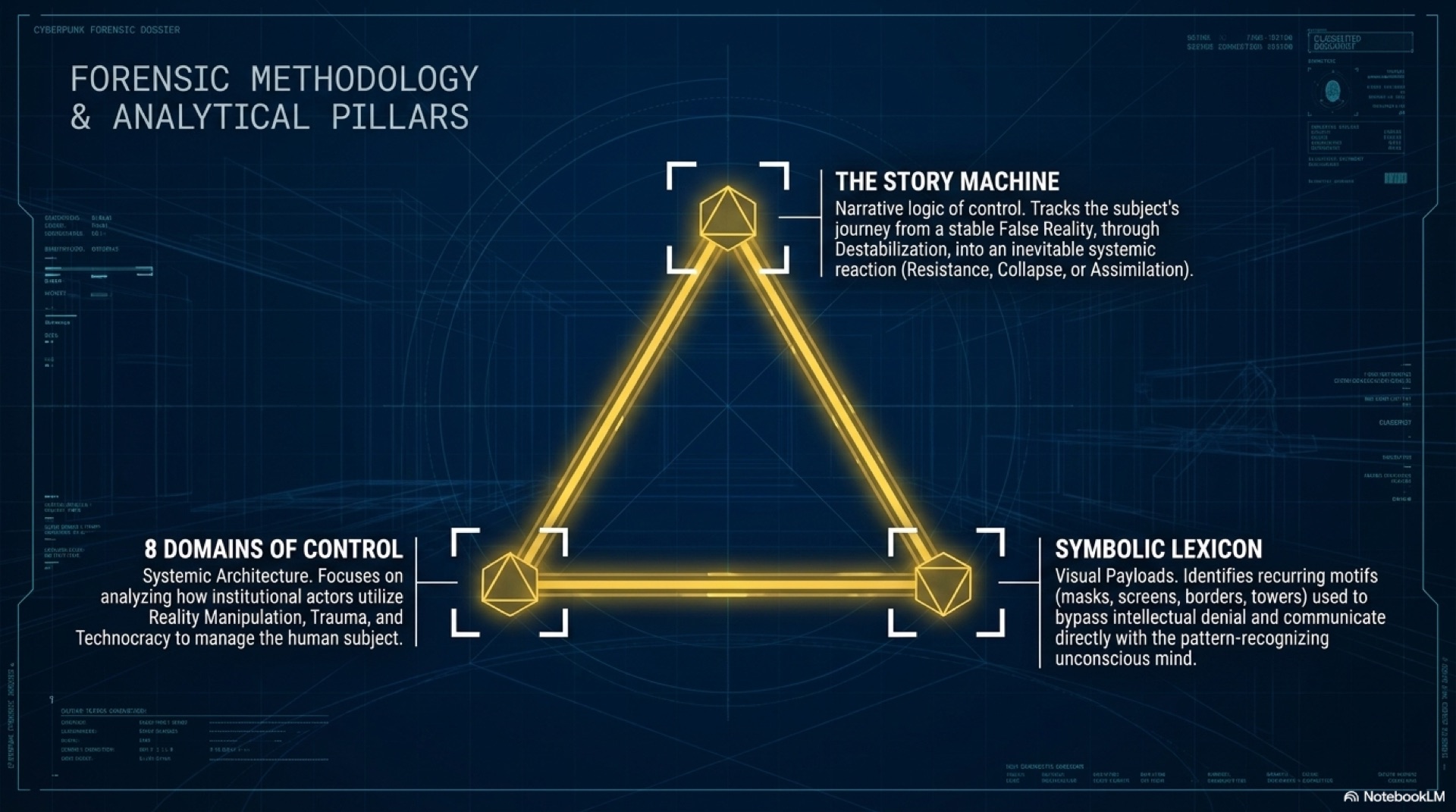
The Great Before as Soft Administration
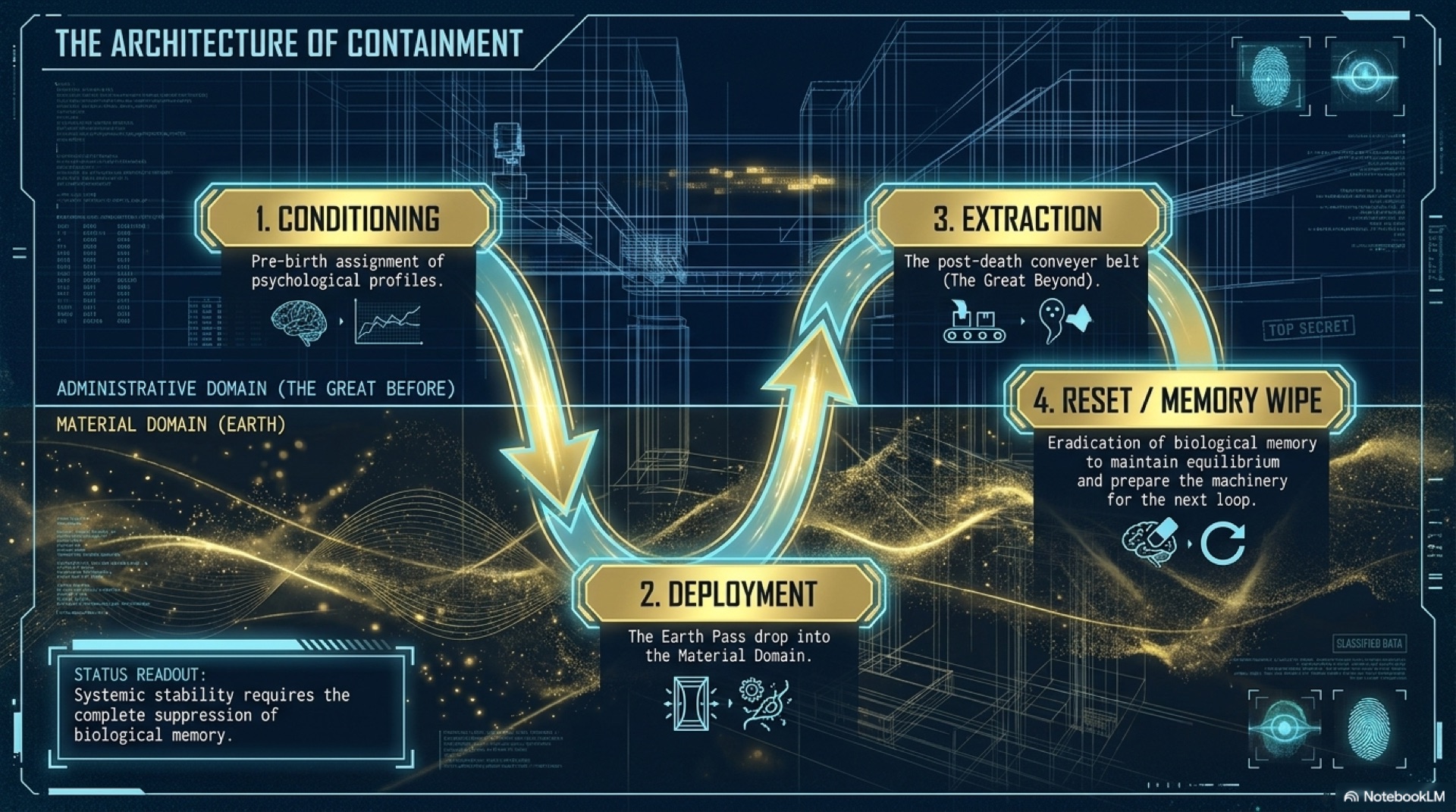
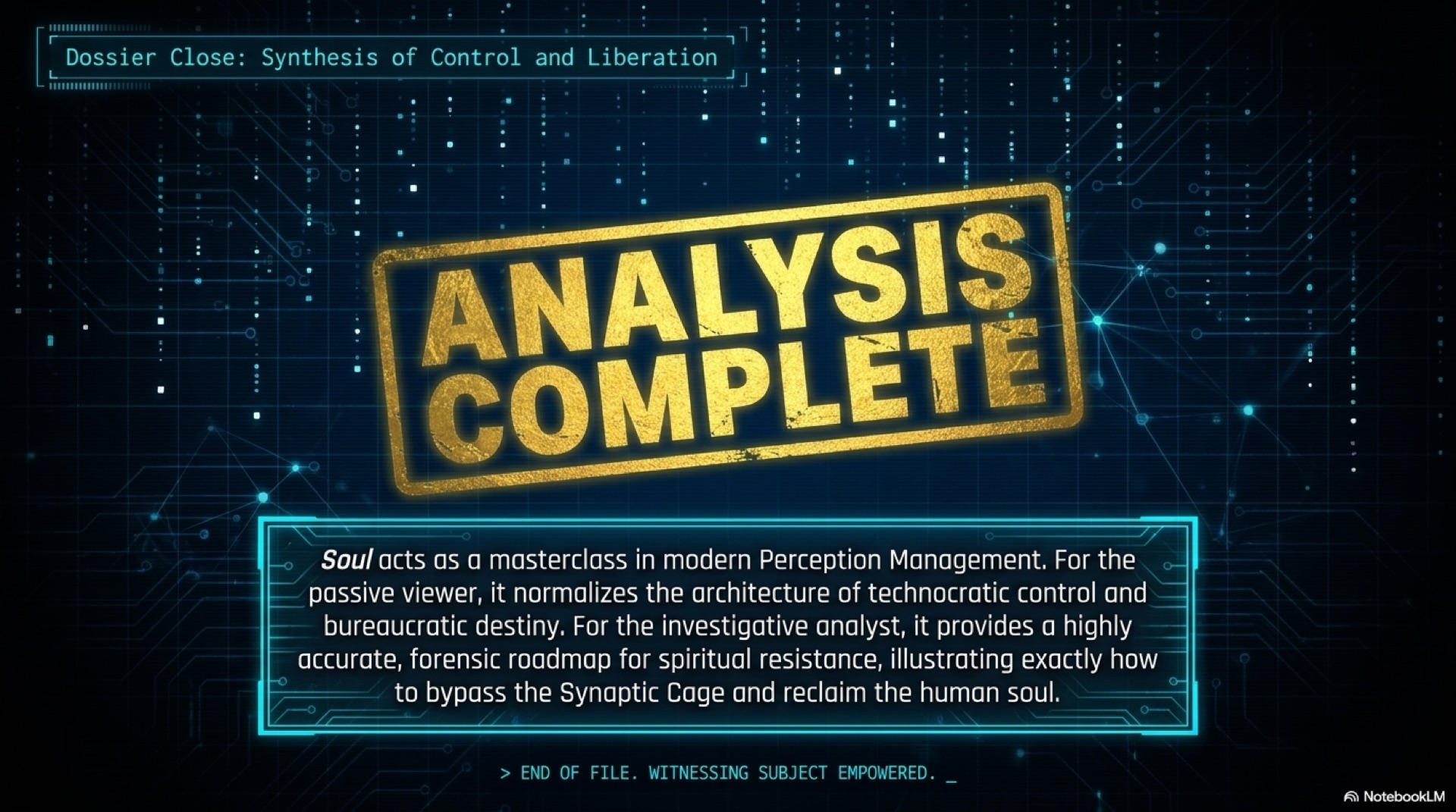
The Great Before appears playful and benevolent, yet it processes souls through trait assignment, personality formation, and preparation for a predetermined role. Its counsellors are not cruel; they are administratively indifferent. Their flat, faceless forms symbolise authority without biological depth.
This becomes a metaphor for identities assembled before conscious choice: family expectations, educational sorting, economic reward, media aspiration, and social approval. Awakening does not require rejecting every inherited trait. It means discovering which parts still express life and which parts merely keep the assigned character functioning.
The Lost Souls and the Synaptic Cage
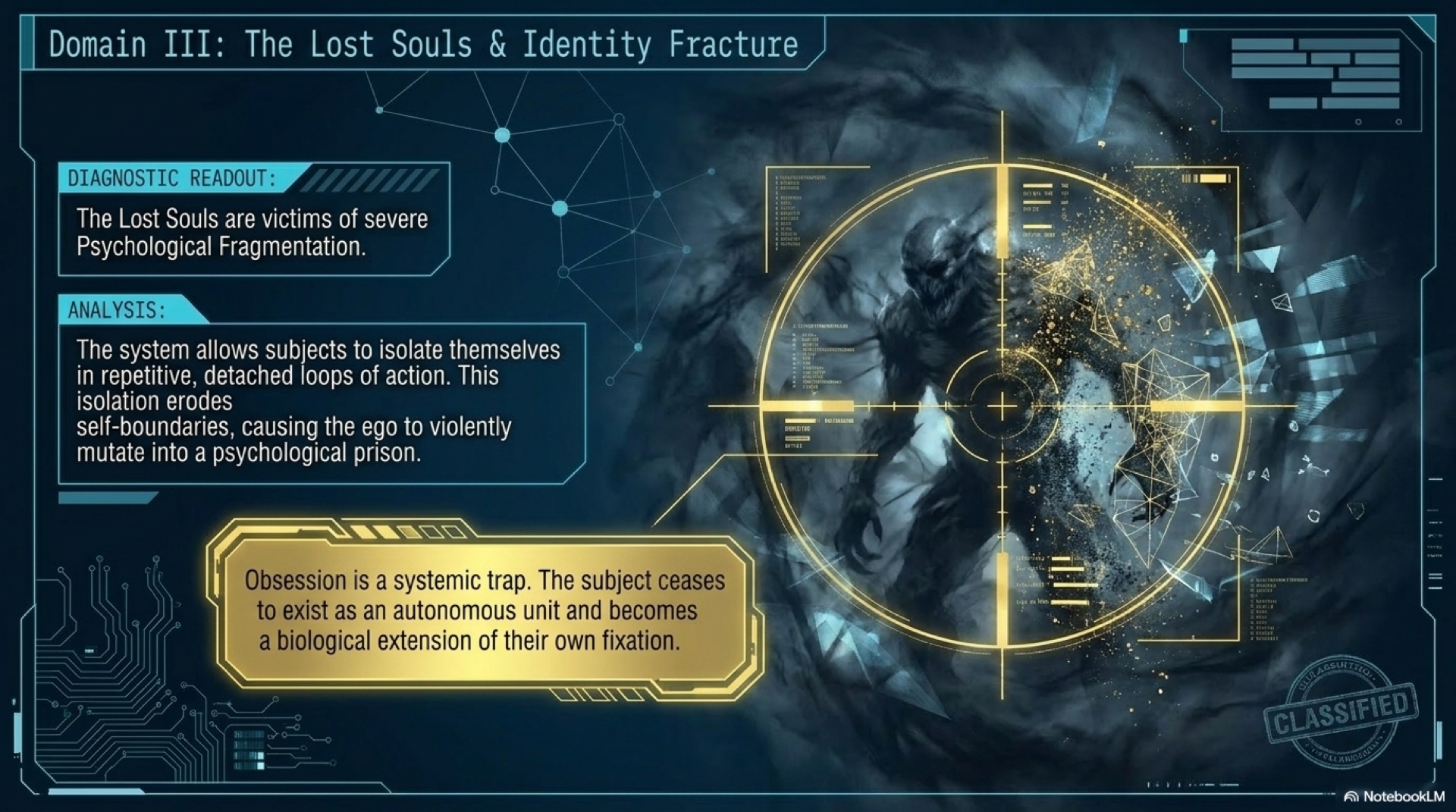
The Lost Souls show healthy engagement becoming fixation. Action separates from embodied reality, repetition hardens into a loop, external sensation is rejected, and the person becomes an extension of the obsession. The gift has swallowed the life it was meant to enrich.
Obsession is not evidence of deeper purpose. Sometimes it is avoidance wearing the costume of commitment. The diagnostic question is simple: Does this pursuit increase presence, relationship, and responsiveness, or does everything outside it increasingly feel like interruption?
The Mundane World as Counter-Symbol
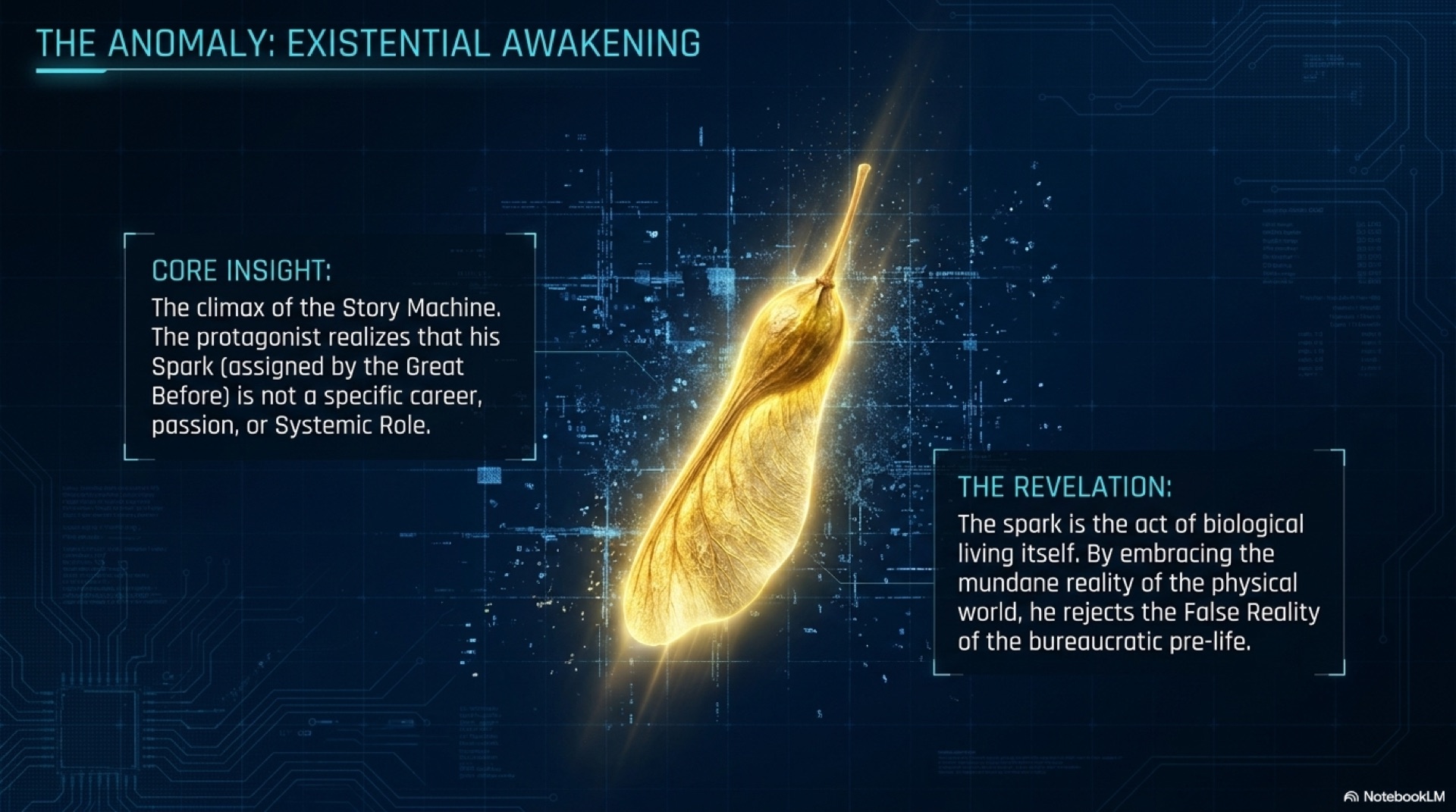
Pizza, wind, autumn leaves, pavement, conversation, and music heard from the street carry the film's most radical teaching. They are not consolation prizes for those who failed to achieve. They are where life is actually occurring.
Twenty-two's spark is not a career. It is responsiveness to being alive. This is the Deus Intus principle in embodied form: the power sought in a future identity already exists as attention, sensation, curiosity, and choice in the present.

From Ego to Self
Joe's liberation does not destroy ambition. It returns ambition to proportion. Jazz can remain sacred without being asked to justify his existence. When ego reconnects with a larger Self, vocation becomes expression rather than proof.
Inner sovereignty appears in his final uncertainty: he does not know exactly what he will do, but he intends to live. The absence of a rigid script is no longer failure. It is space in which presence can become authorship.
A Practice for Recovering the Spark
- Name the achievement you have asked to complete your identity.
- Notice what ordinary life is being postponed until it arrives.
- Spend ten minutes receiving sensation without turning it into productivity.
- Return to your work as expression rather than proof.
- End the day by recording one moment that was alive without being impressive.