
Culture Dossier · Novel and Film
1984: Projecting the Panopticon
A forensic analysis of surveillance, symbolic control, and the battle to preserve an inner reality that power cannot rewrite.
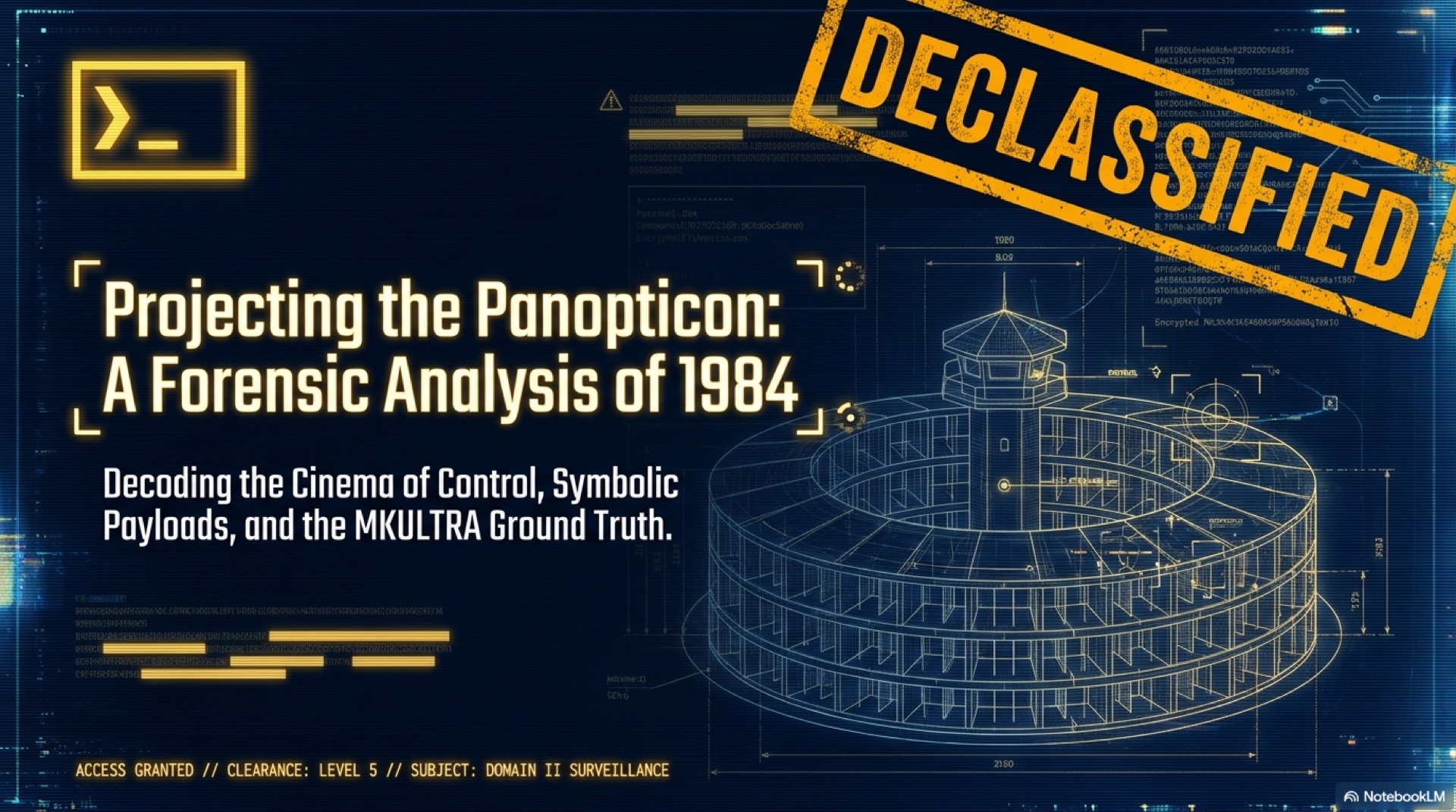
The Architecture of Total Visibility
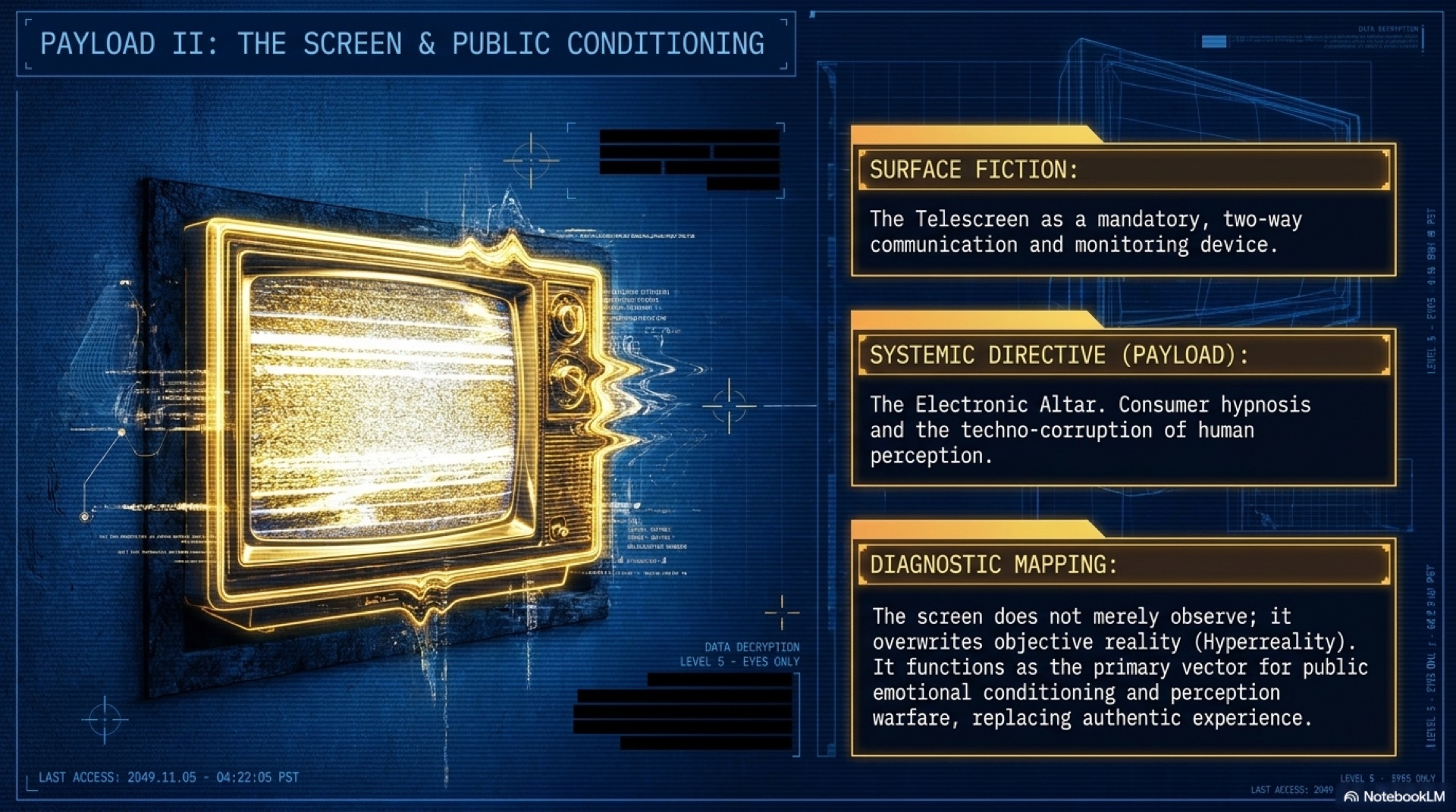
Orwell's world is governed not only by cameras and police but by the internalised expectation of being watched. The telescreen changes posture, expression, speech, and eventually thought. When observation may be continuous, the subject begins performing obedience even in solitude.
The deeper warning is that surveillance becomes complete when an external watcher is no longer necessary. The imagined eye moves inside the person and edits behaviour before it appears. Power within begins with noticing this internal censor: the voice that anticipates punishment, ridicule, or exclusion and therefore prevents honest thought from becoming honest speech.
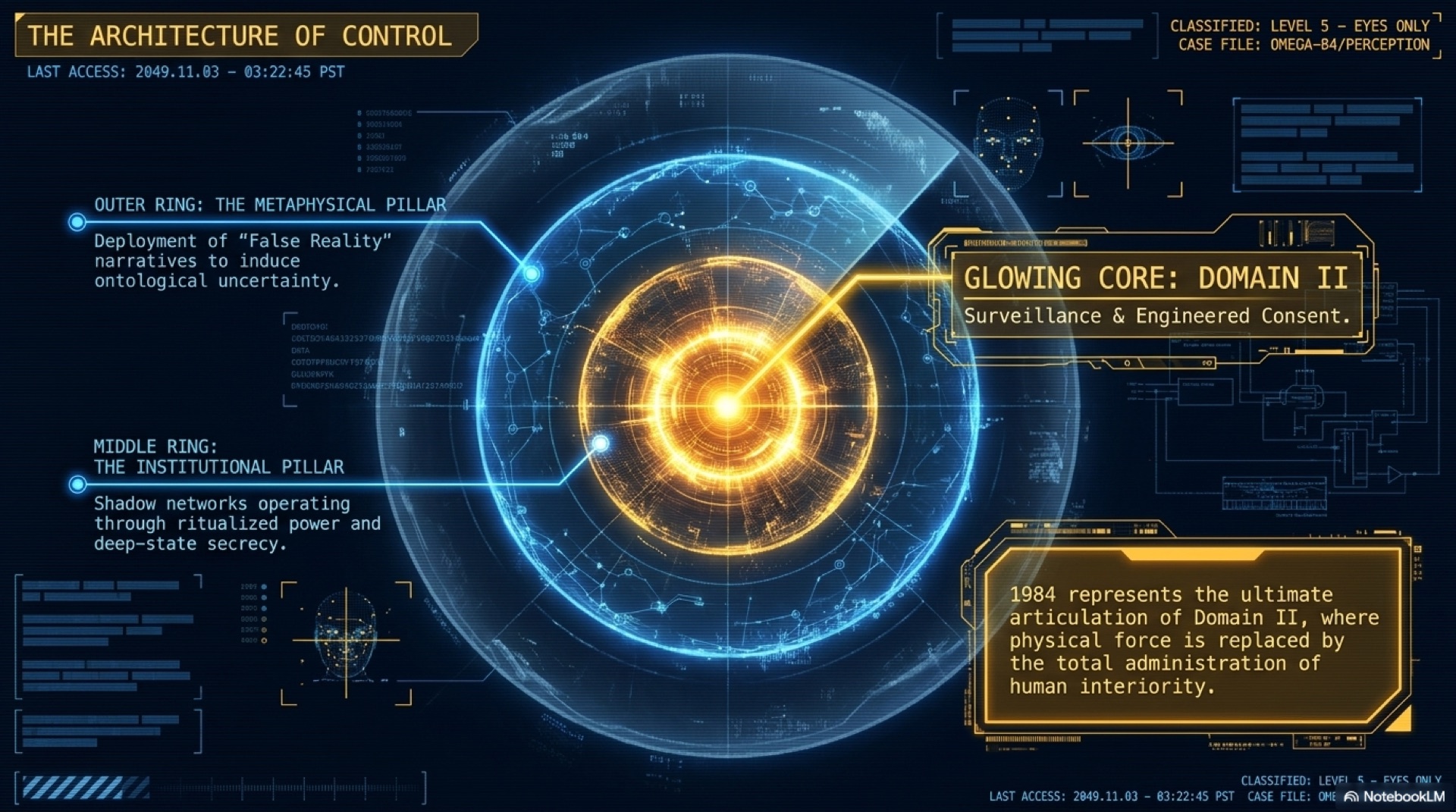
Reality as an Administrative Product
The Ministry of Truth does not merely circulate propaganda. It creates a world in which evidence has no stable continuity. Yesterday's alliance, production figure, or public enemy can be replaced, and the record will confirm the new account. The citizen is forced to choose between lived memory and institutional reality.
This is why Winston's diary matters. Writing creates a witness outside the immediate command. A record says that an experience occurred even when authority demands its erasure. Personal memory is fallible, but a society without independent records becomes radically vulnerable to manufactured certainty.
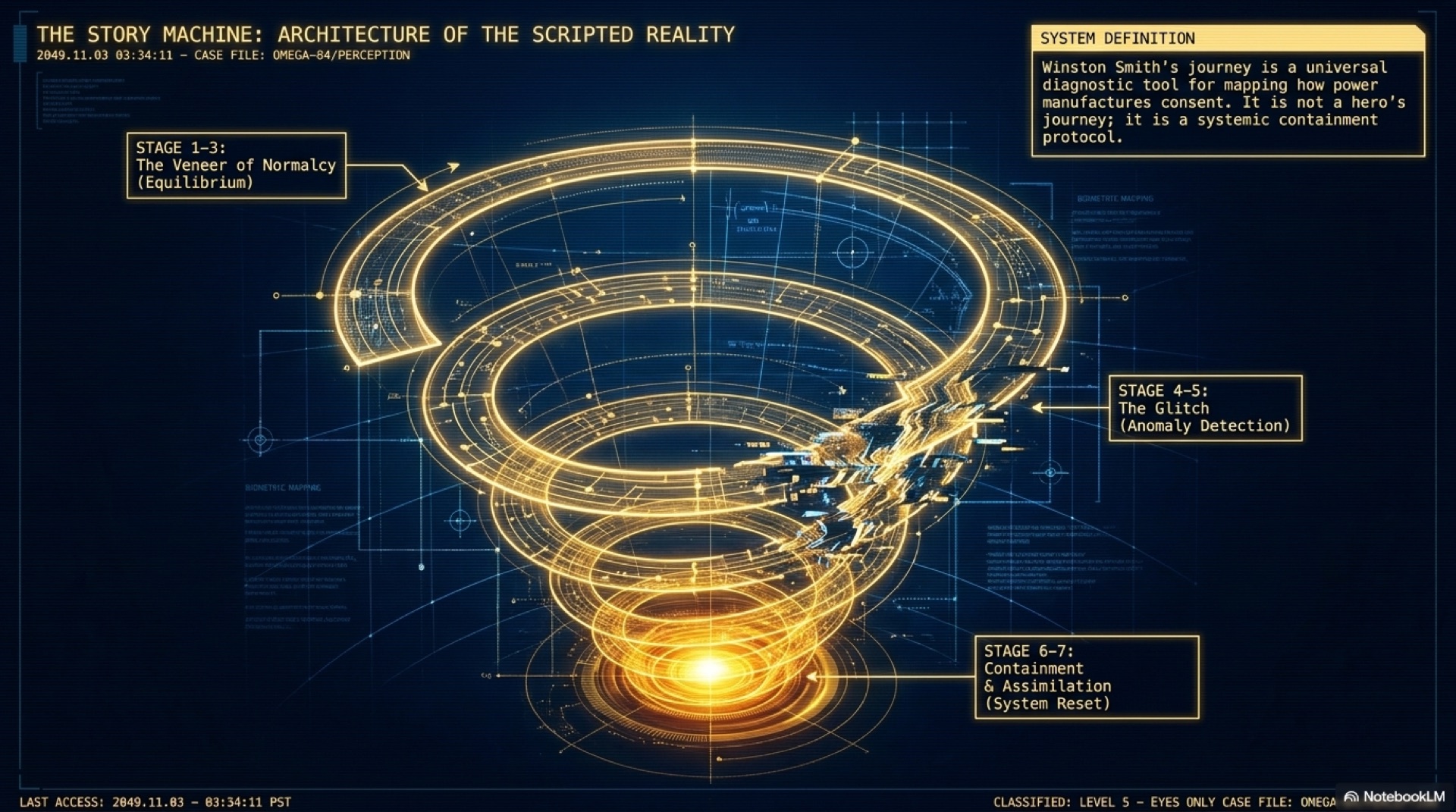
Newspeak and the Shrinking of Possibility
Newspeak demonstrates that language is an instrument of perception. Reduce the available words and certain distinctions become harder to formulate. If domination can only be described as protection, if contradiction becomes loyalty, and if emotional complexity is compressed into slogans, then thought loses resolution.
Reclaiming inner power therefore includes reclaiming precise language. Name what happened without exaggeration or minimisation. Distinguish fear from danger, compliance from consent, uncertainty from falsehood, and discomfort from harm. Precision keeps the mind from being captured by someone else's categories.
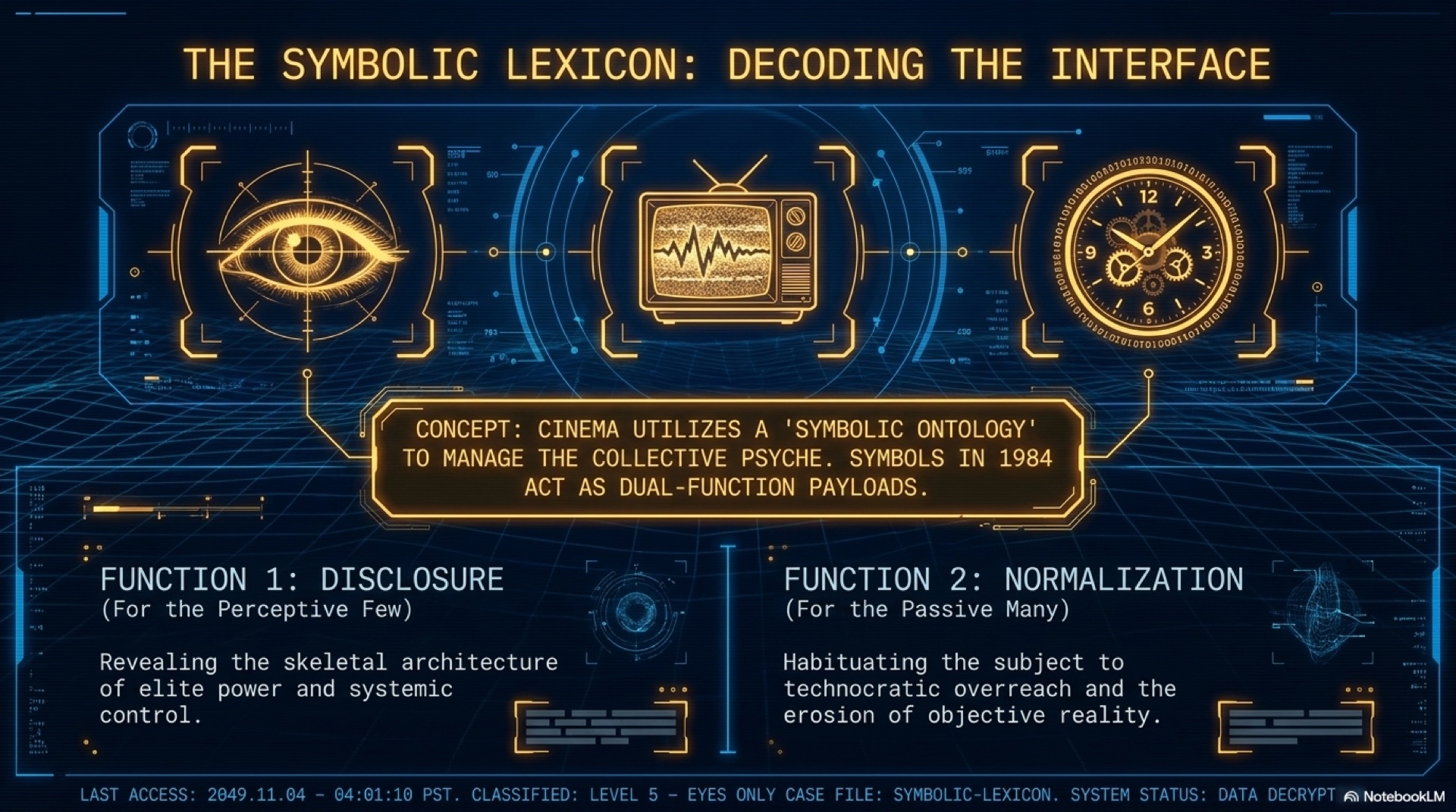
Doublethink and the Divided Self
Doublethink is the trained capacity to hold contradiction while denying that a contradiction exists. It is psychologically expensive. The self must repeatedly sever perception from speech and memory from public performance. Over time, survival through division can feel like identity.
Awakening restores coherence gradually. It asks: What do I perceive? What can I verify? What am I saying? What action follows? When these layers align, inner authority strengthens. Coherence does not guarantee safety, but it protects the person from becoming completely dependent upon external permission to know what they know.
Room 101 and the Limits of Individual Resistance
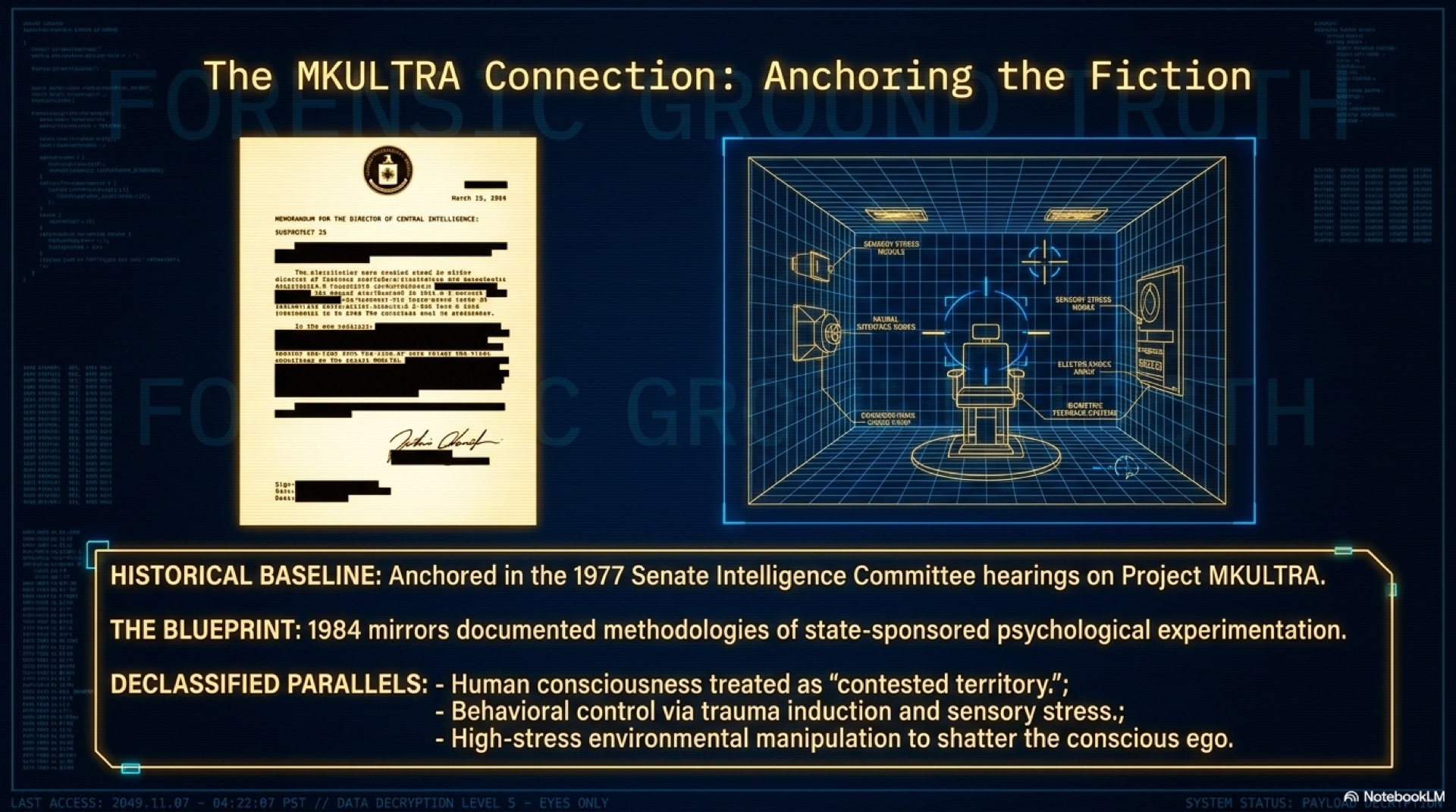
The story refuses an easy victory. Room 101 finds the fear capable of breaking the subject's final attachment. Winston's defeat warns against romanticising isolated resistance. Courage requires community, material support, trustworthy memory, and practices that regulate fear before crisis arrives.
The lesson is not that resistance is futile. It is that the self cannot be defended by willpower alone. Build relationships in which truth can be spoken, preserve independent records, practise tolerating disagreement, and care for the body whose alarm system power will attempt to exploit.
A Practice for Protecting Inner Truth
- Write one observation in plain, non-dramatic language.
- Record the evidence and the limits of what you know.
- Notice where social pressure changes the words you use.
- Discuss the observation with someone capable of honest disagreement.
- Choose an action that keeps conscience and reality in contact.