
Culture Dossier · Film
Don't Look Up: The Spectacle Machine and the Refusal to See
A study of how undeniable danger becomes content, identity, and political theatre while the human capacity for attention collapses.
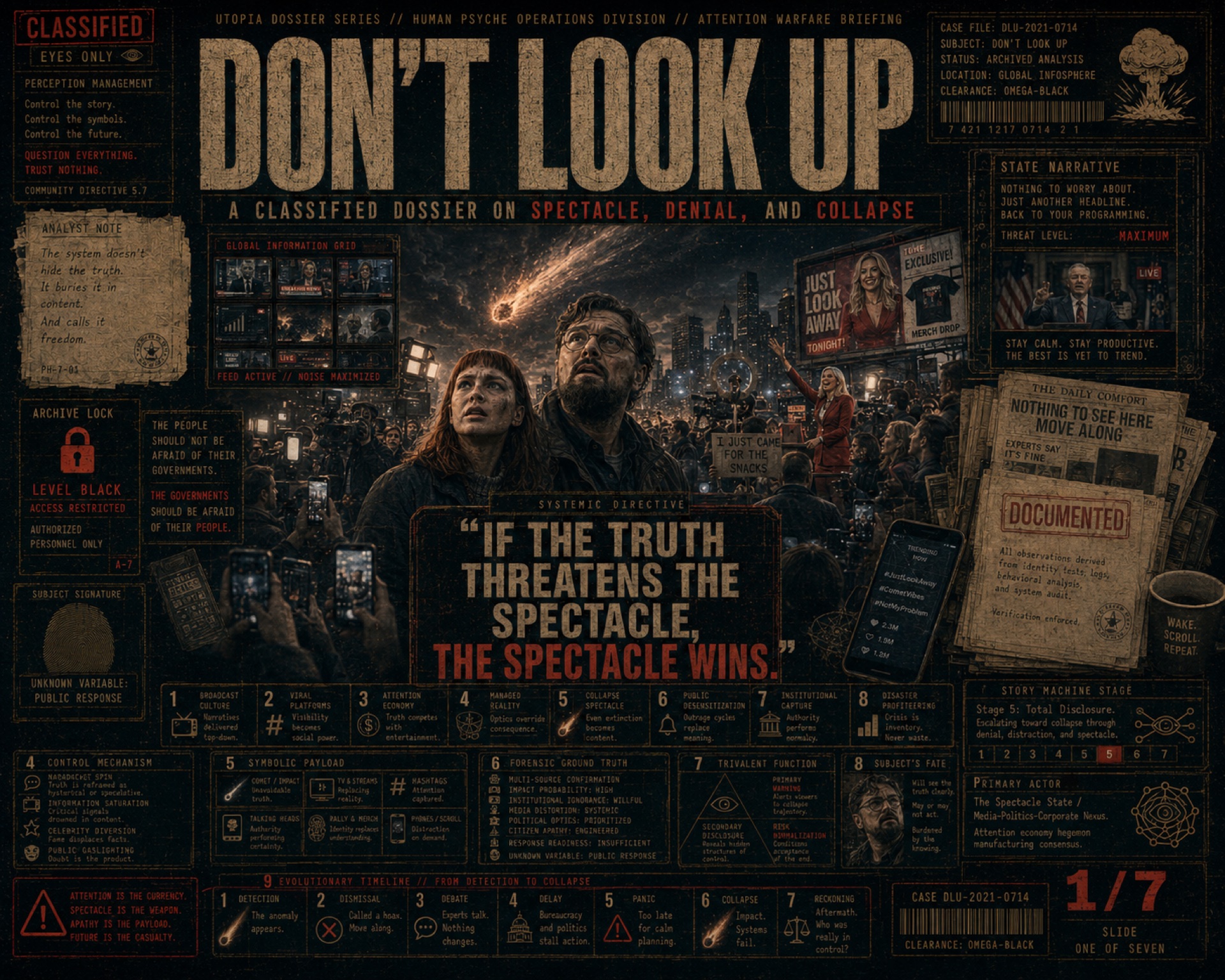
When Reality Becomes a Media Problem
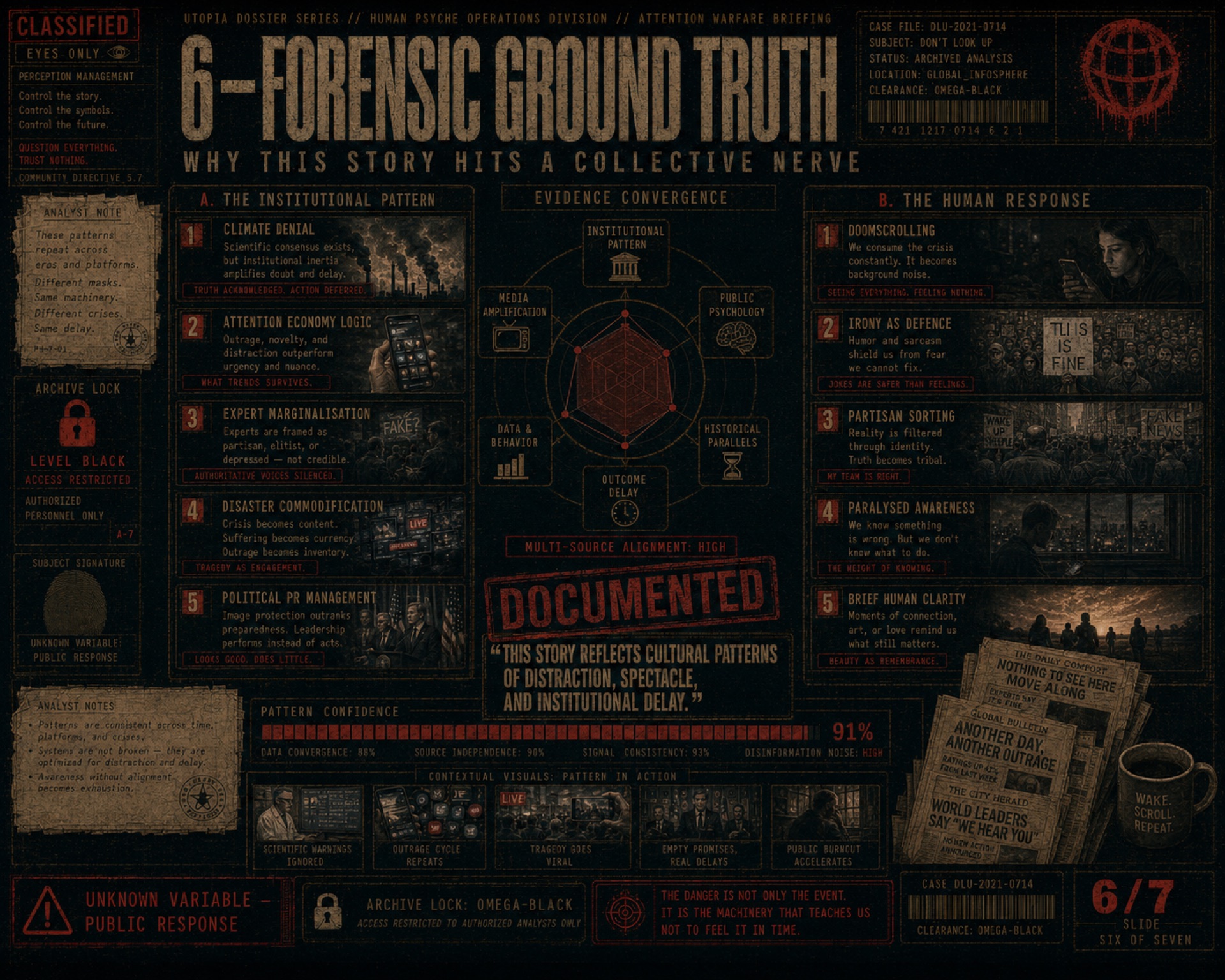
The film begins with a fact: a comet is heading toward Earth. Yet the fact must pass through political calculation, entertainment formats, market incentives, and identity warfare before the public can respond. Reality is not denied only by lying; it is diluted by making every truth compete with branding, outrage, and distraction.
The scientists believe evidence will organise action. The system treats evidence as raw material for narrative. This difference is the film's central wound. A civilisation can possess extraordinary information while lacking the moral and emotional capacity to receive it.
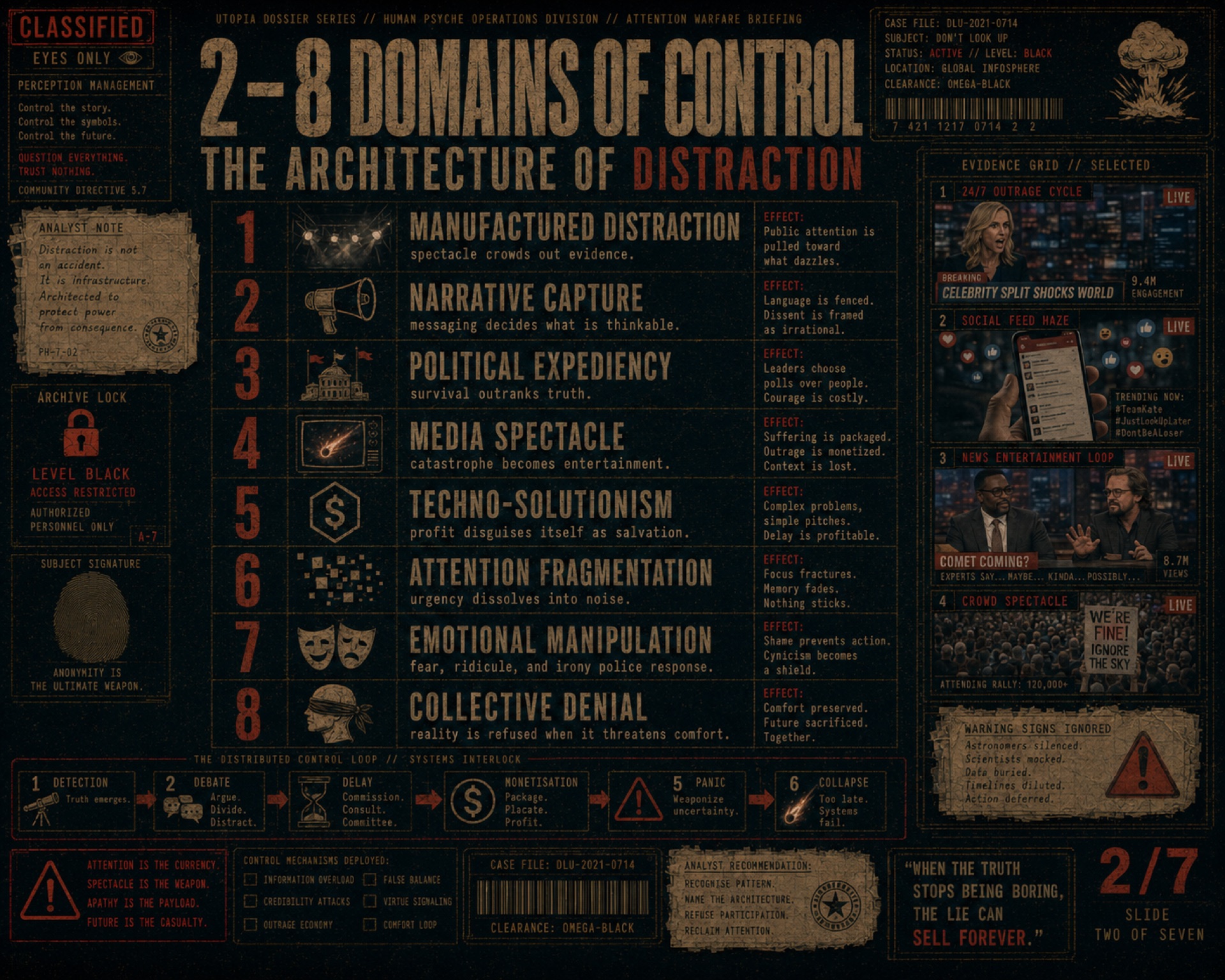
The Seven Stages of Managed Denial
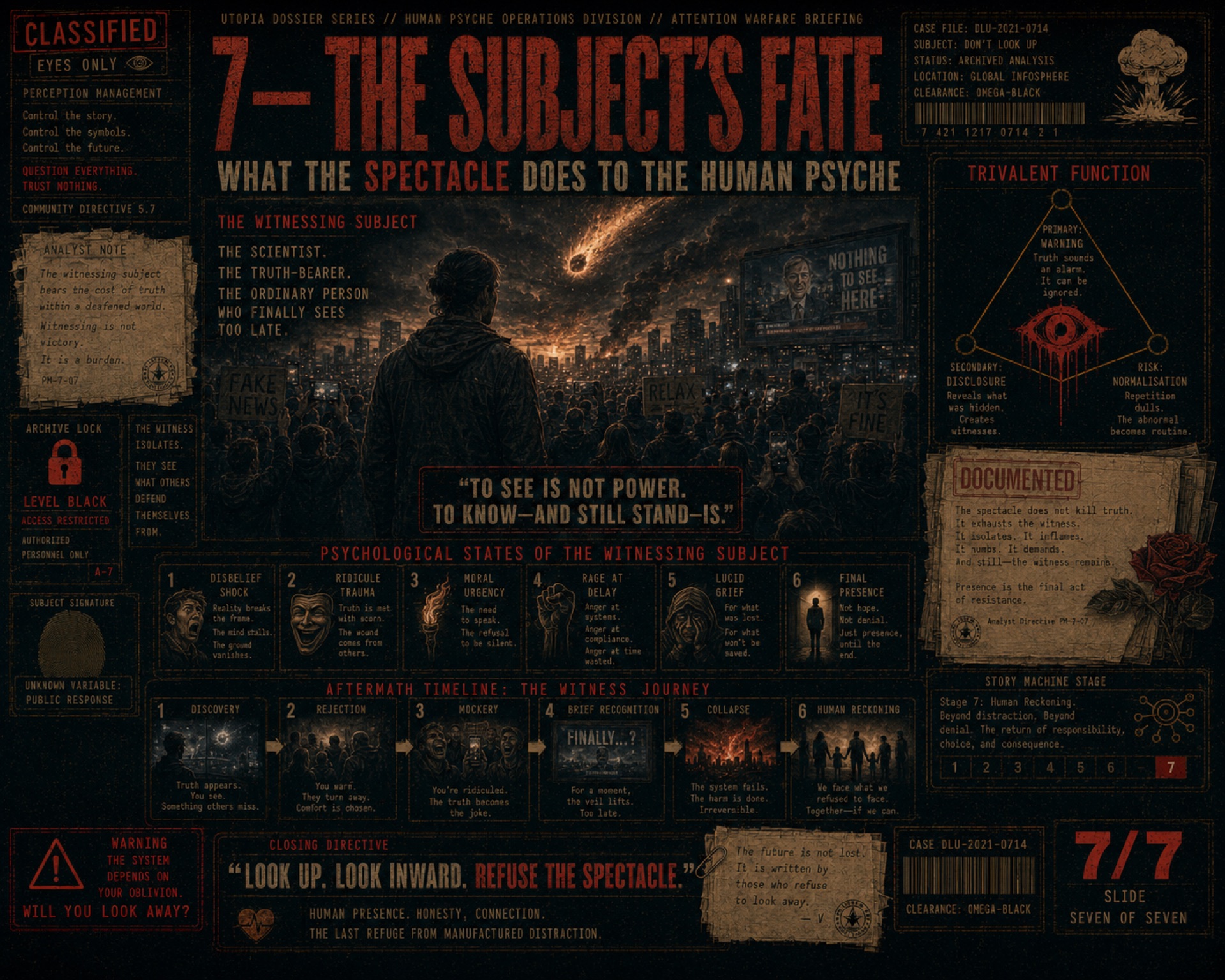
Discovery becomes anomaly, then destabilisation. The warning is contained, repackaged, and finally absorbed into spectacle. Those who insist upon direct language are portrayed as unstable, while calm performance is mistaken for competence. The public is offered slogans instead of orientation.
This is why awakening requires more than access to information. It requires tolerance for grief, uncertainty, and responsibility. Denial is often an emotional defence before it becomes an intellectual position. People reject what would force them to change their priorities, allegiances, or image of the world.
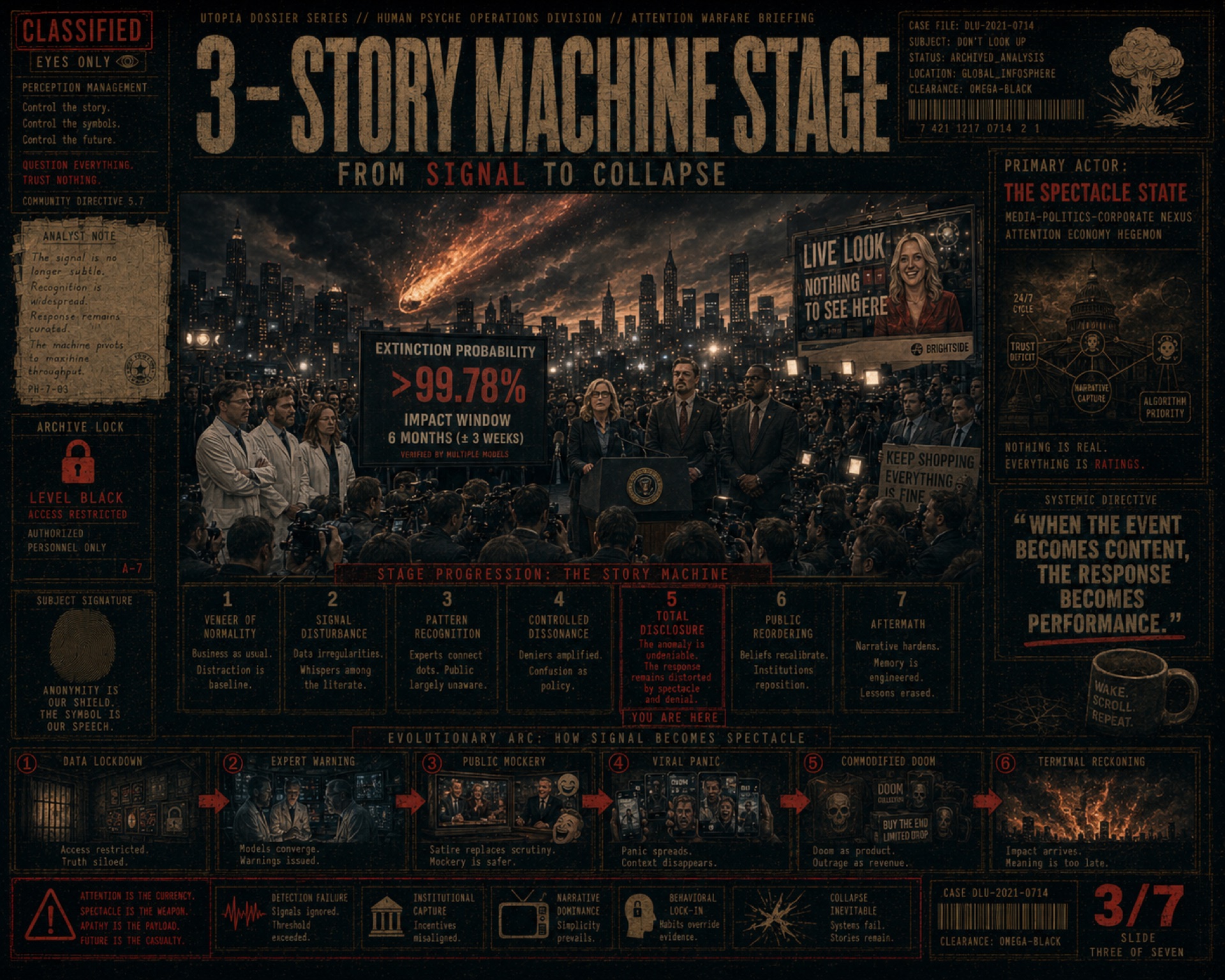
Attention Is the Contested Territory
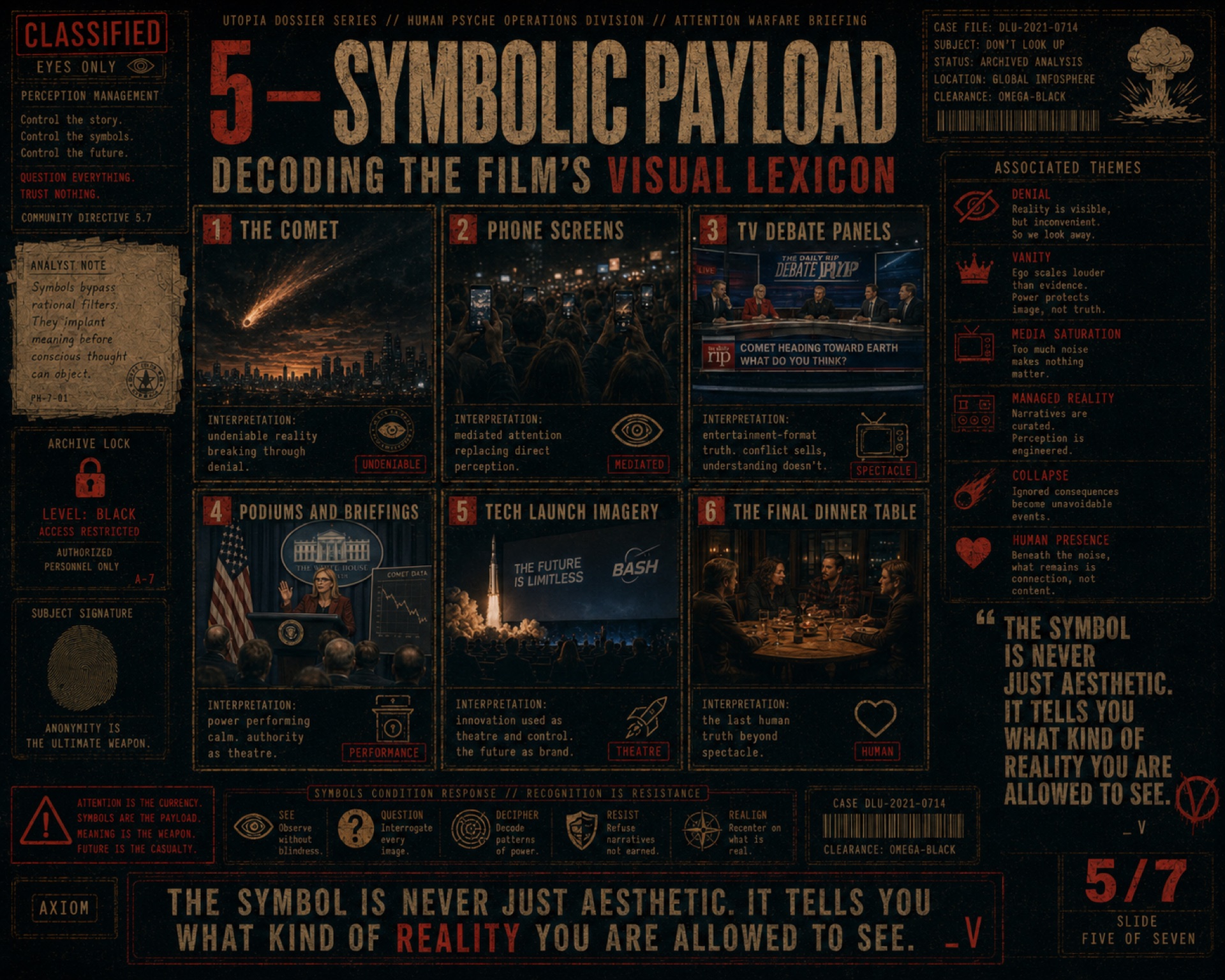
The talk show, the phone screen, the podium, and the corporate presentation all compete to define the emotional meaning of the comet. The crisis becomes funny, sexy, profitable, partisan, and finally unreal. Attention does not disappear; it is fragmented until sustained thought becomes difficult.
The power within begins with recovering the ability to stay with what is true after novelty fades. That means reading beyond the headline, resisting compulsory commentary, and making decisions from values rather than from the mood of the feed. A person who can sustain attention can still act while others are being moved from stimulus to stimulus.
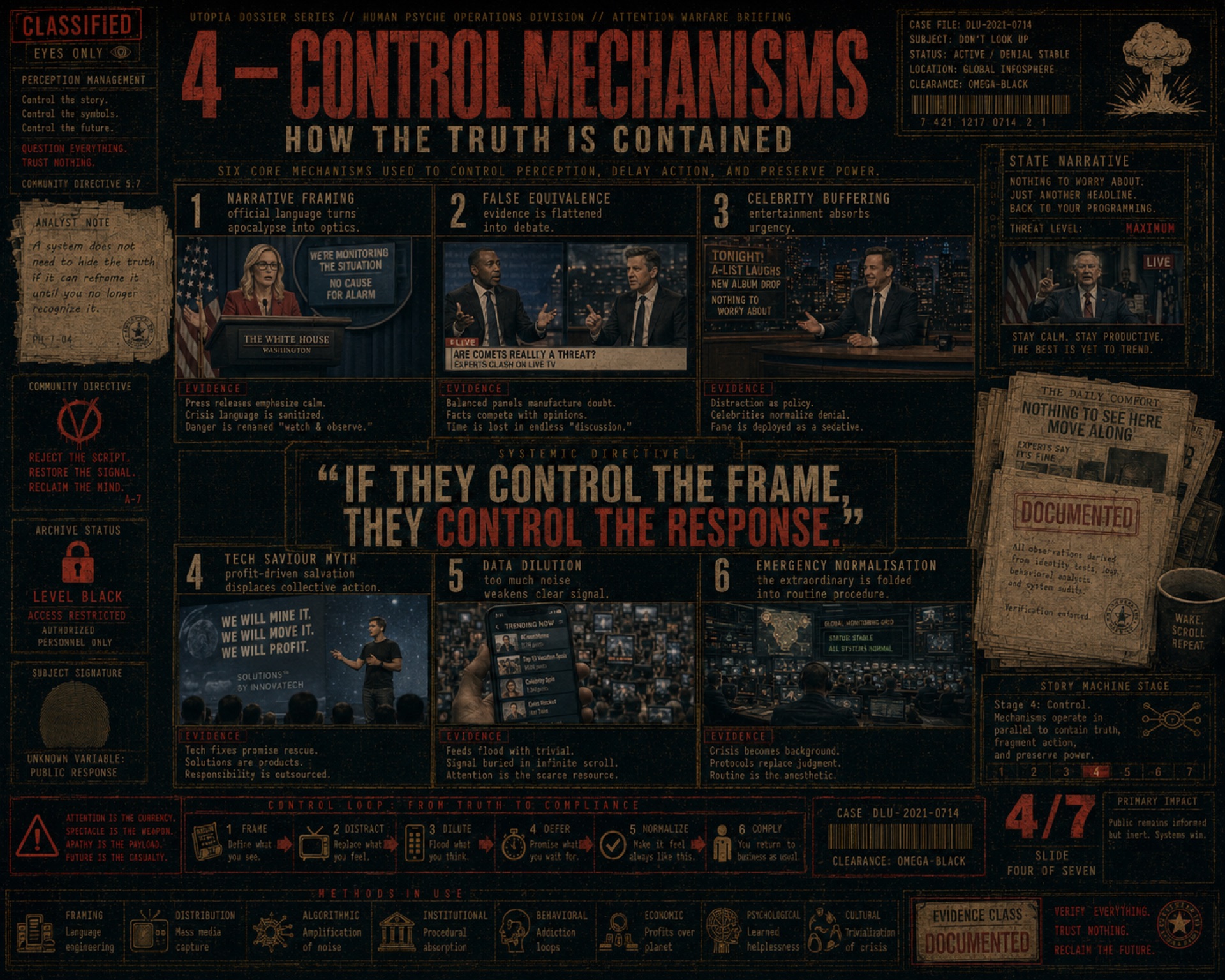
Technological Salvation and Corporate Appetite
The proposed solution is abandoned when the comet becomes economically valuable. Here the film exposes a familiar spiritual error: intelligence without wisdom. Technology is treated as a substitute for moral character, as though a more advanced tool could correct motives organised around extraction.
Inner sovereignty asks a prior question: What is the tool serving? Innovation can express care or appetite. The same ingenuity that might protect life can be redirected toward private gain when public institutions surrender judgement to concentrated power.
The Dinner Table and Final Presence
The ending does not offer outer victory. It offers a smaller and more radical liberation: the characters stop performing for the machine and return to one another. They eat, remember, express gratitude, and inhabit the final moments without mediation.
This is not passivity. It is the recovery of meaning from a system that has exhausted every distraction. The dinner table reveals that presence was never insignificant. Relationship, food, touch, memory, and honest speech are the world we were trying to save.
A Practice for Staying With Reality
- Choose one issue that matters and stop consuming commentary about it for one hour.
- Find the clearest primary evidence available.
- Name the feeling the evidence creates without turning that feeling into a conclusion.
- Identify one action within your real sphere of influence.
- Give equal attention to one relationship or place the action is meant to protect.