
Culture Dossier · Film
They Will Kill You: Predation, Sacrifice and the Survivor's Awakening
A symbolic reading of elite power, hidden violence, and the moment a survivor refuses to remain the system's offering.

The Building Is Not the Trap
Asia Reaves enters the Virgil through an ordinary portal: a job listing that promises work, housing, and legitimacy. The tower is elegant, professional, and apparently safe. That respectable surface is precisely what makes it effective. The system recruits through vulnerability, shields itself with prestige, and turns disposable people into the hidden cost of elite continuity.
The film's symbolic power lies in this inversion. Luxury and violence are not opposites; luxury becomes the camouflage through which violence avoids recognition. Awakening begins when Asia stops reading the building according to its public identity and starts reading what its routes, silences, and disappearances actually reveal.
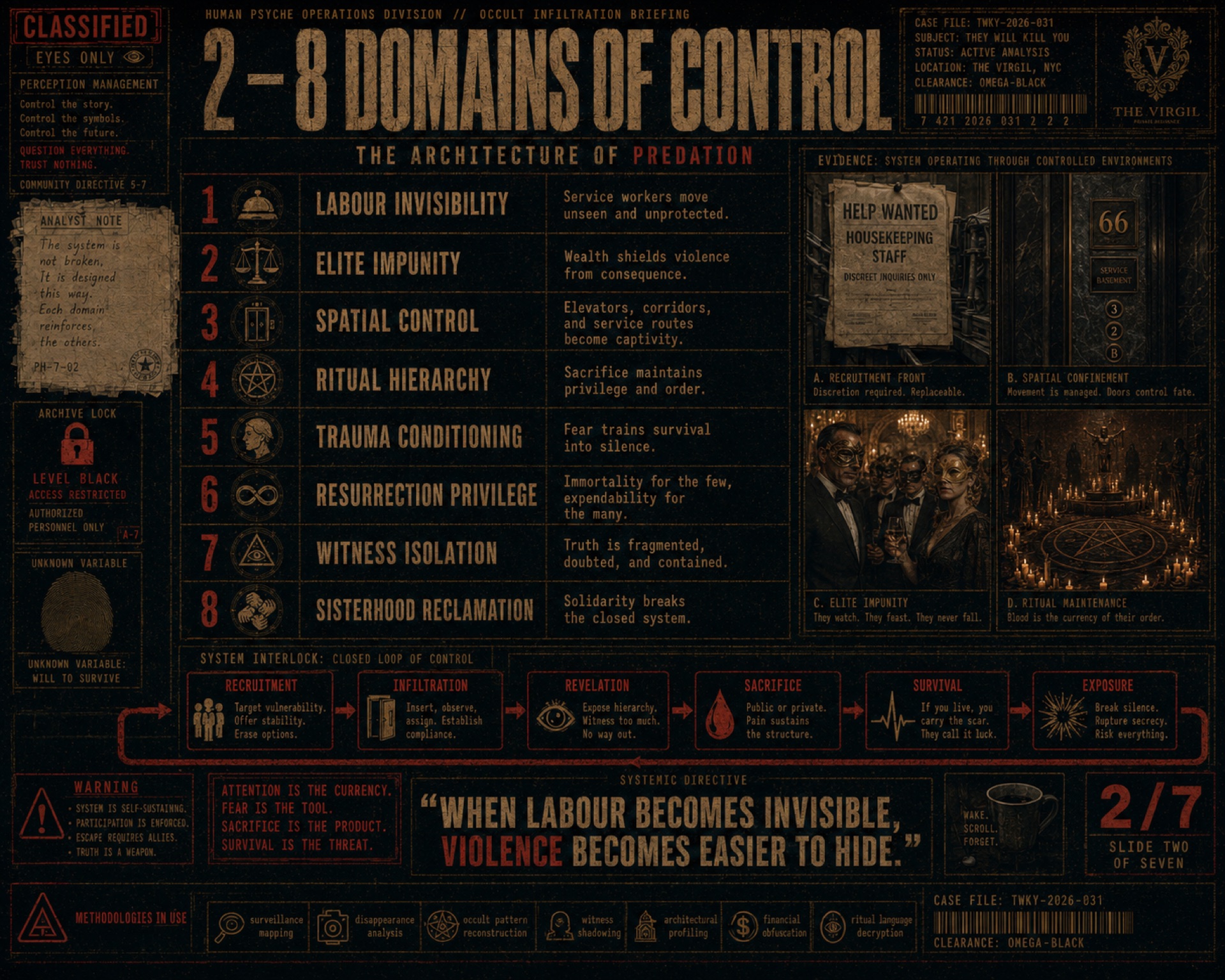
Eight Domains of Predation
The dossier identifies labour invisibility, elite impunity, spatial control, ritual hierarchy, trauma conditioning, resurrection privilege, witness isolation, and sisterhood reclamation. These forces reinforce one another. Workers who are treated as background can disappear without disrupting the building's image. Wealth creates distance from consequence. Hidden corridors keep knowledge fragmented, while ritual converts appetite into supposed duty.
The useful real-world lesson is not that every prestigious institution conceals a cult. It is that exploitation becomes easier wherever people are made invisible, testimony is isolated, and reputation is protected more fiercely than human life. Discernment asks who carries the cost, who controls the account, and whose absence is treated as administratively convenient.

From Survivor to Witness
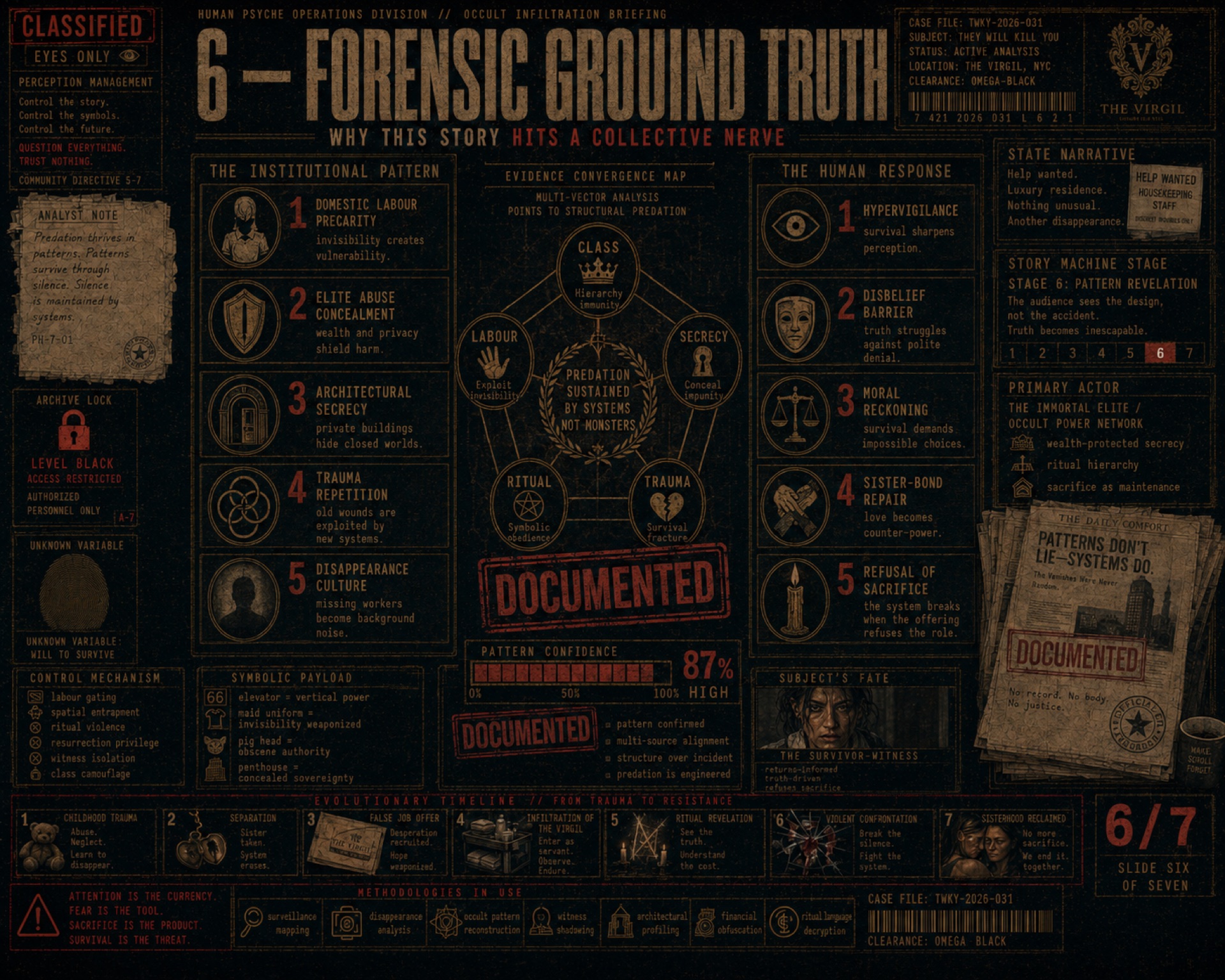
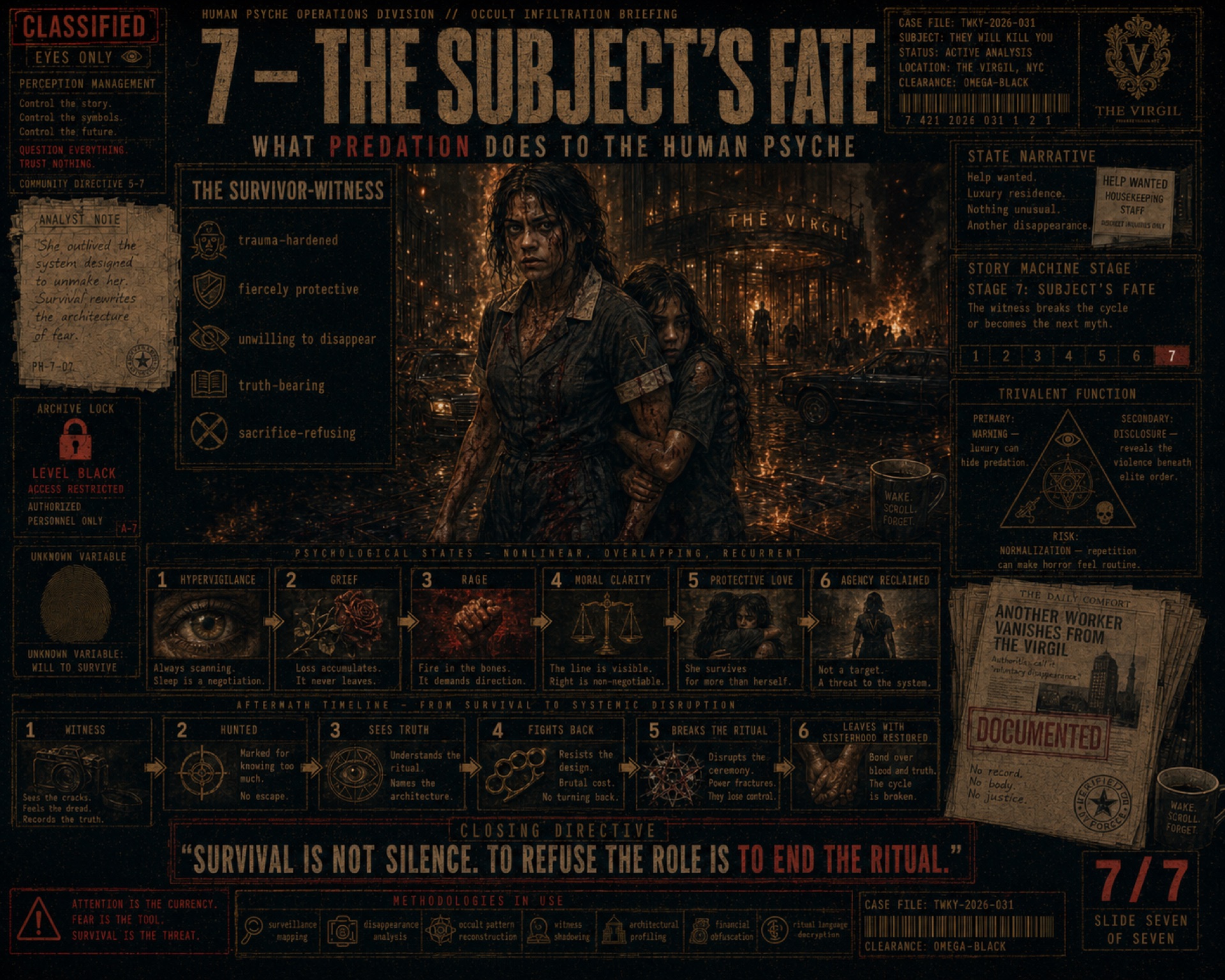
Asia's trauma has a double edge. Hypervigilance carries exhaustion, but it also detects what complacency misses. Her awakening becomes constructive when the wound stops defining her as prey and becomes information she can use without surrendering to it. She moves from reacting inside someone else's ritual to acting from moral clarity.
This is the power within in its least romantic form: the ability to remain present when a familiar pattern tries to assign you the old role. It does not require fearlessness. It requires enough inner ground to say, "I recognise this architecture, and I will not cooperate with my own erasure."
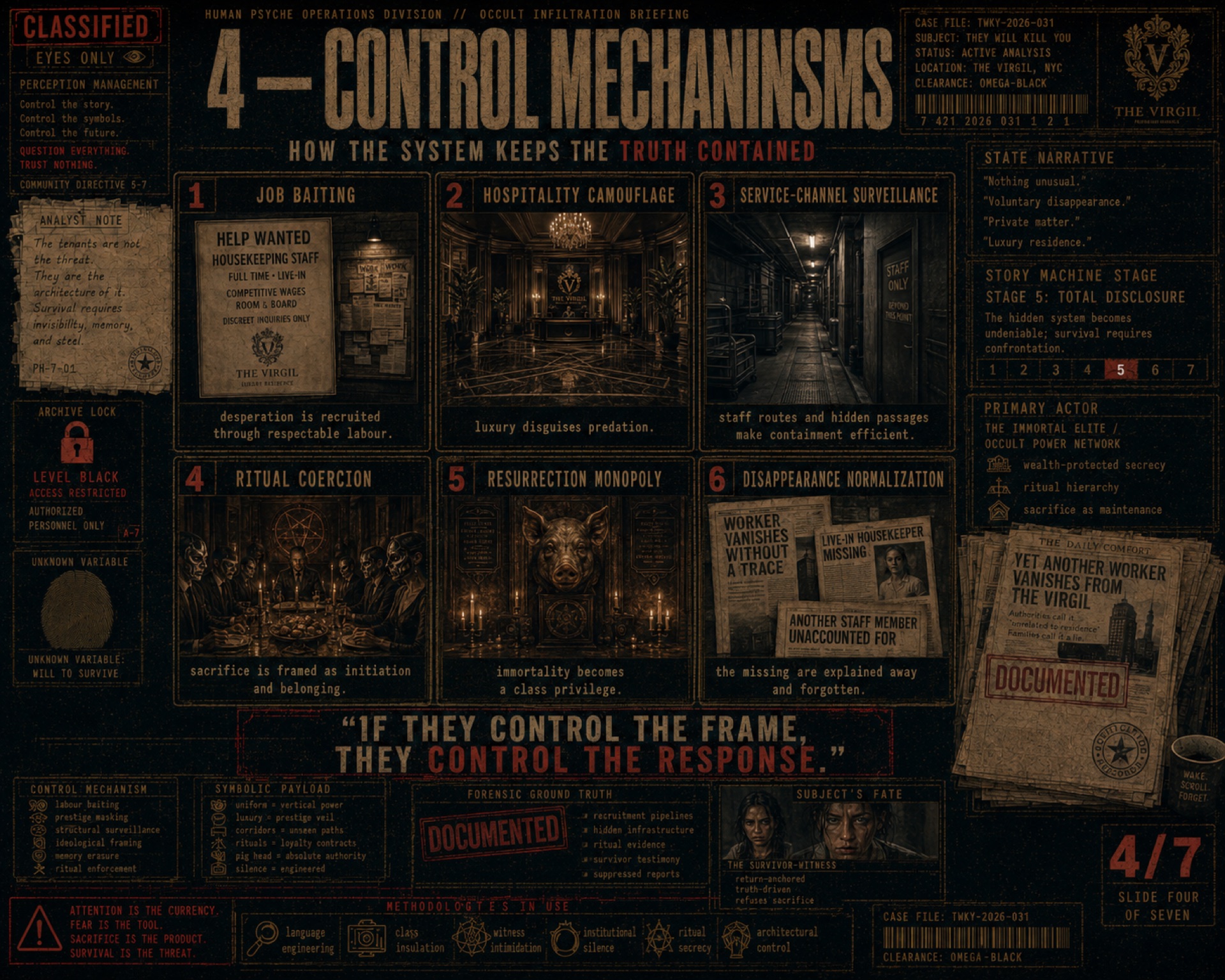
Sisterhood Breaks the Vertical Order
The system expects loyalty to flow upward: worker to employer, initiate to hierarchy, sacrifice to beneficiary. Asia and Maria create a different axis. They witness one another horizontally. Protective love interrupts the isolation upon which predation depends and turns private survival into shared refusal.
Solidarity matters because many systems convince each person that their suffering is individual, shameful, or uniquely deserved. When testimony meets testimony, the pattern becomes visible. The isolated subject becomes part of a living record that is harder to erase.
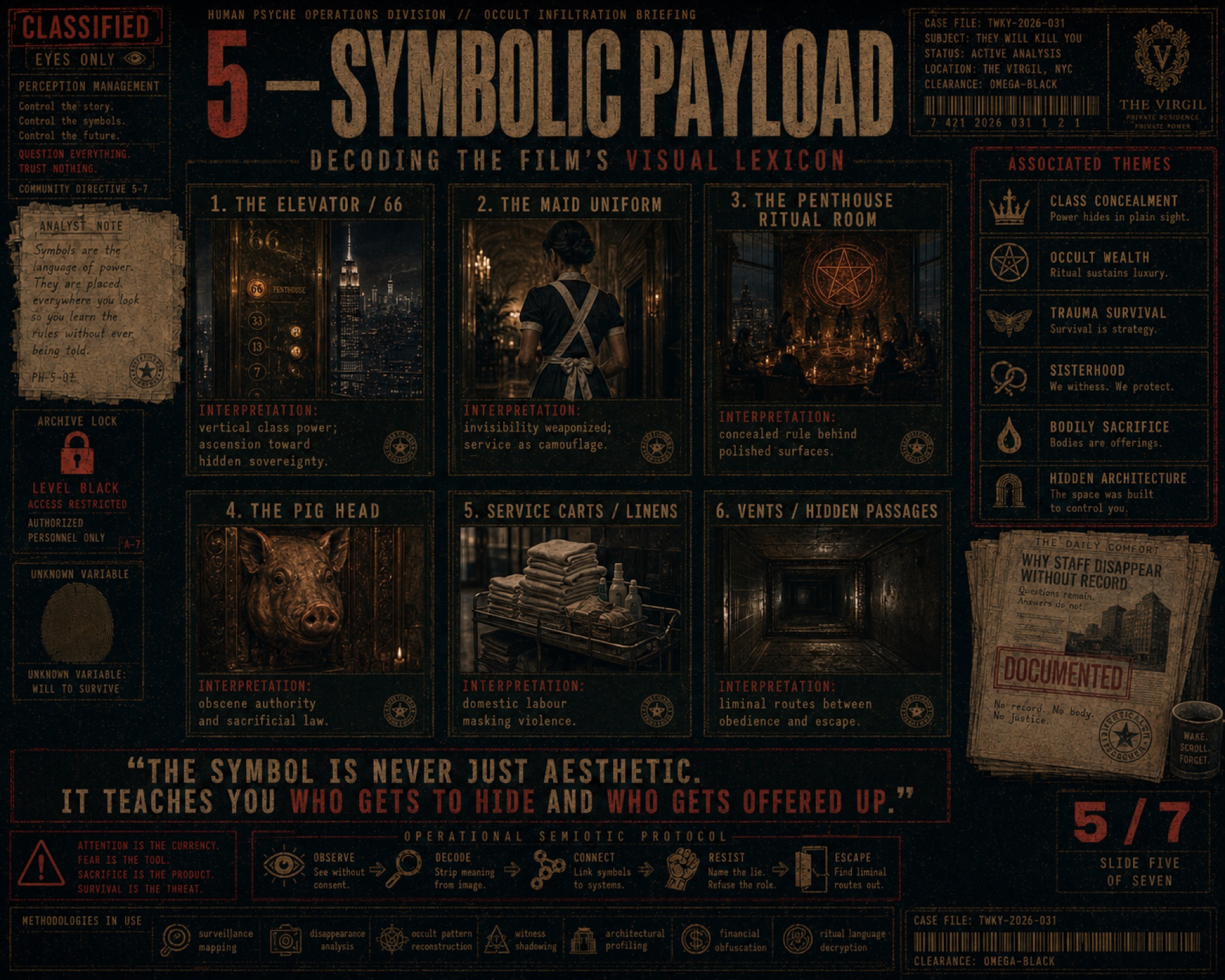
Refuse the Role
The film's deepest instruction is not simply to identify a predator. It is to recognise the internal bargain that makes disposability feel like the price of belonging. Where have you accepted invisibility for security? Where has survival trained you to remain silent? What part of you still negotiates with what is consuming you?
Refusal can be practical and proportionate: document what happened, speak with a trusted witness, seek support, set a boundary, leave an unsafe arrangement, or stop translating harm into personal inadequacy. Power does not begin when the whole building falls. It begins when the assigned offering remembers that consent can be withdrawn.
A Practice of Protective Refusal
- Name the role that makes you smaller.
- Separate immediate danger from conditioned fear.
- Tell one trustworthy person what you have been carrying alone.
- Choose one boundary that protects dignity without abandoning wisdom.
- Record the action so your future self remembers that refusal was possible.