
Blueprint Essays · Visual Guide
V for Vendetta: The Rebellion Against Manufactured Consent
A Deus Intus reflection on fear, propaganda, identity recovery, and the moment a person stops obeying the script.
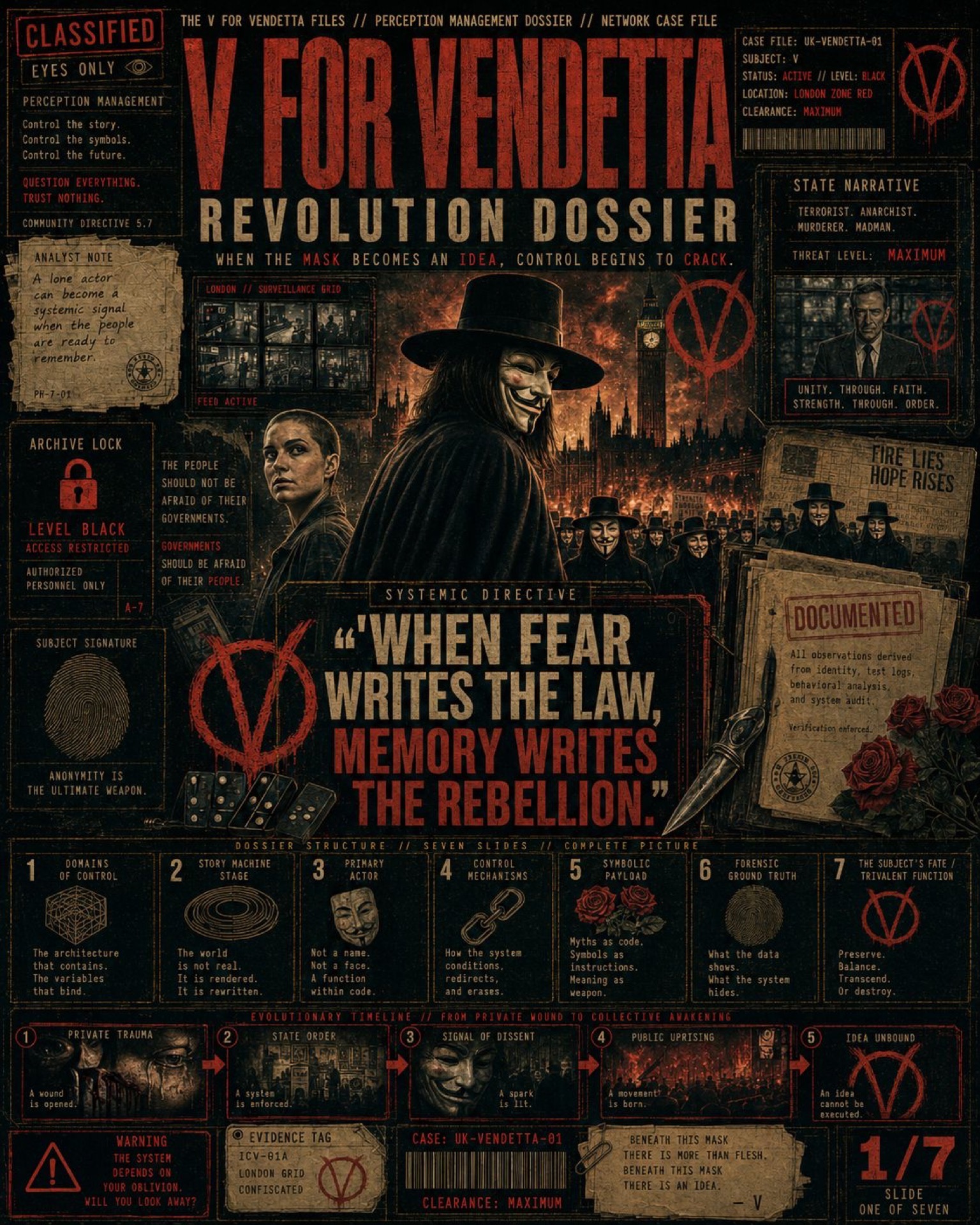
The State as a Fear Machine
V for Vendetta works because it understands the oldest trick in the control manual: keep people afraid and they will beg for the cage. The regime does not merely govern bodies; it manages mood, memory, and the acceptable range of thought.
That is why the story feels contemporary. It is not only about political tyranny. It is about the softer machinery that trains people to accept fewer choices, smaller truths, and a life lived under internal surveillance.
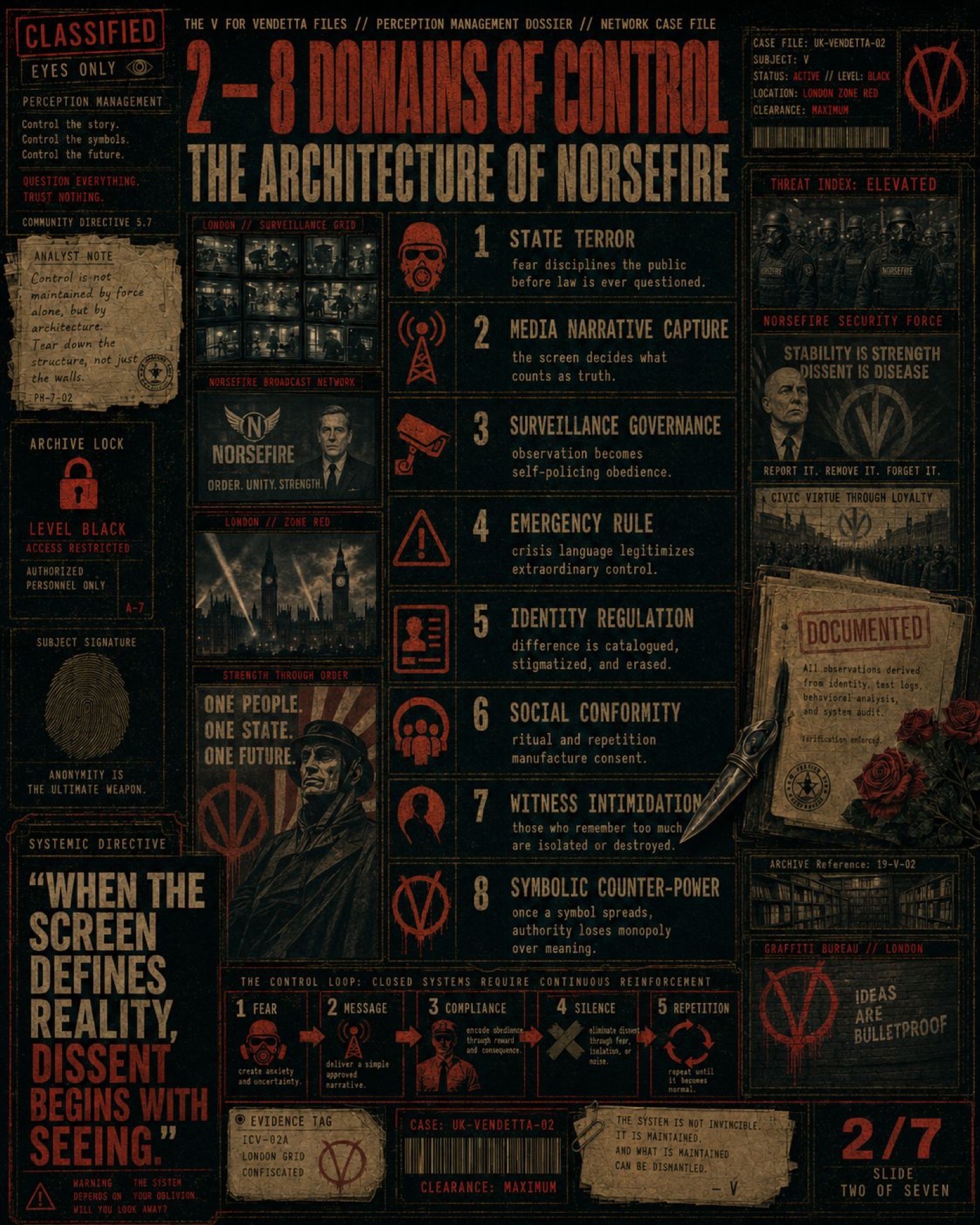
The Mask Is a Signal
V's mask is often treated as a theatrical symbol of rebellion, but the deeper meaning is simpler and sharper. The mask says the public identity is not the final identity. The face the system approves is not the self that survives.
The image above places the symbol beside the machinery it confronts. The contrast matters: authority depends upon recognisable offices, uniforms, broadcasts, and faces, while the mask makes the dissenter difficult to reduce to a biography the regime can discredit.
In Deus Intus language, the mask becomes a declaration of interior sovereignty. It is a refusal to let fear finish the sentence of a human life.
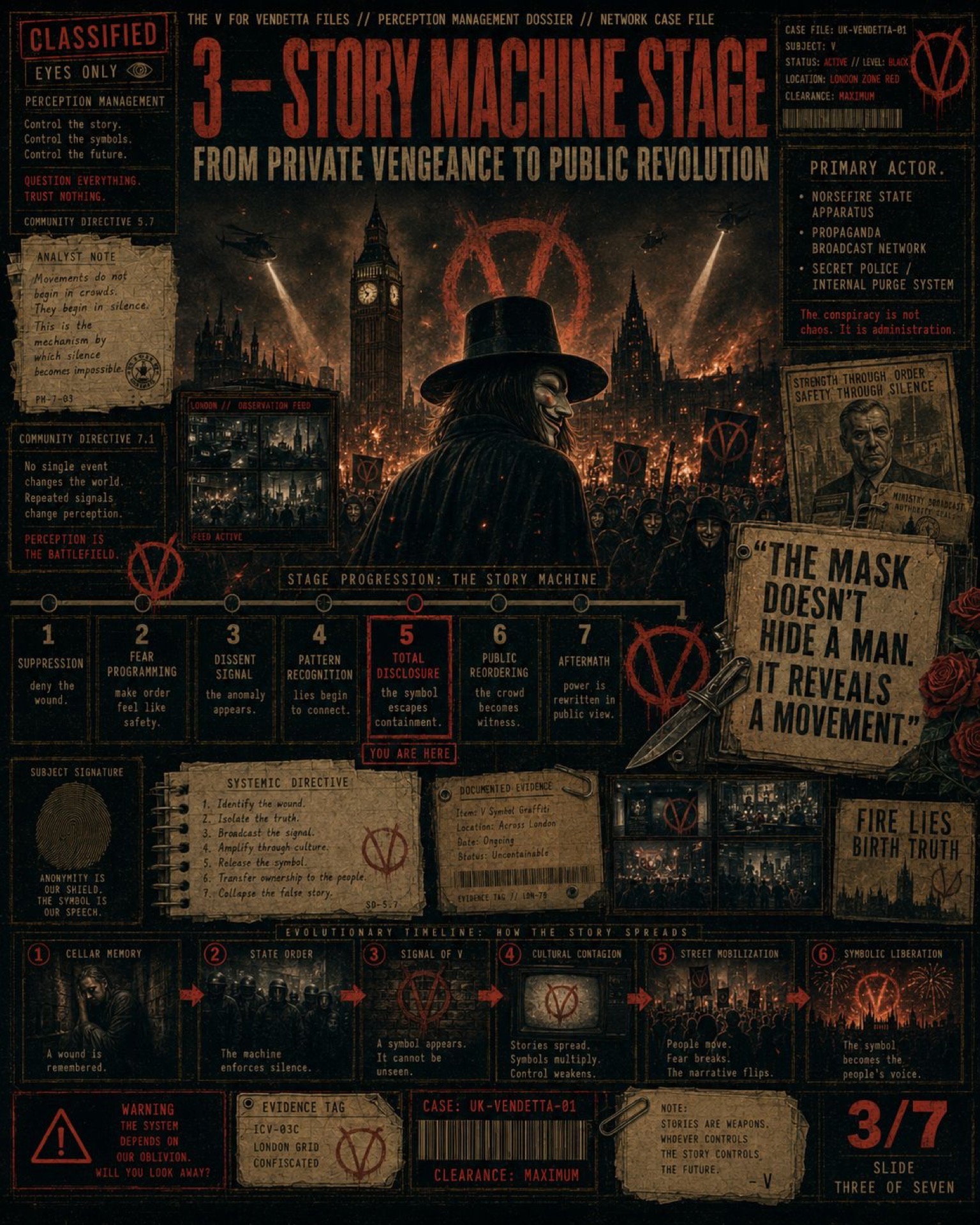
From Trauma to Agency
Evey's transformation is the heart of the film. Her breaking point is not the end of her character. It is the beginning of her authorship. The prison sequence matters because it stages the death of the conditioned self and the birth of a more truthful one.
The image below brings the inner cost of resistance into focus. Political freedom remains abstract until fear is encountered inside the body: the tightened breath, the instinct to comply, the hope that obedience might end the ordeal. Evey's change becomes real when those reflexes no longer govern her.
That passage is painful because liberation always costs something. The old identity must be surrendered before the new one can stand upright.
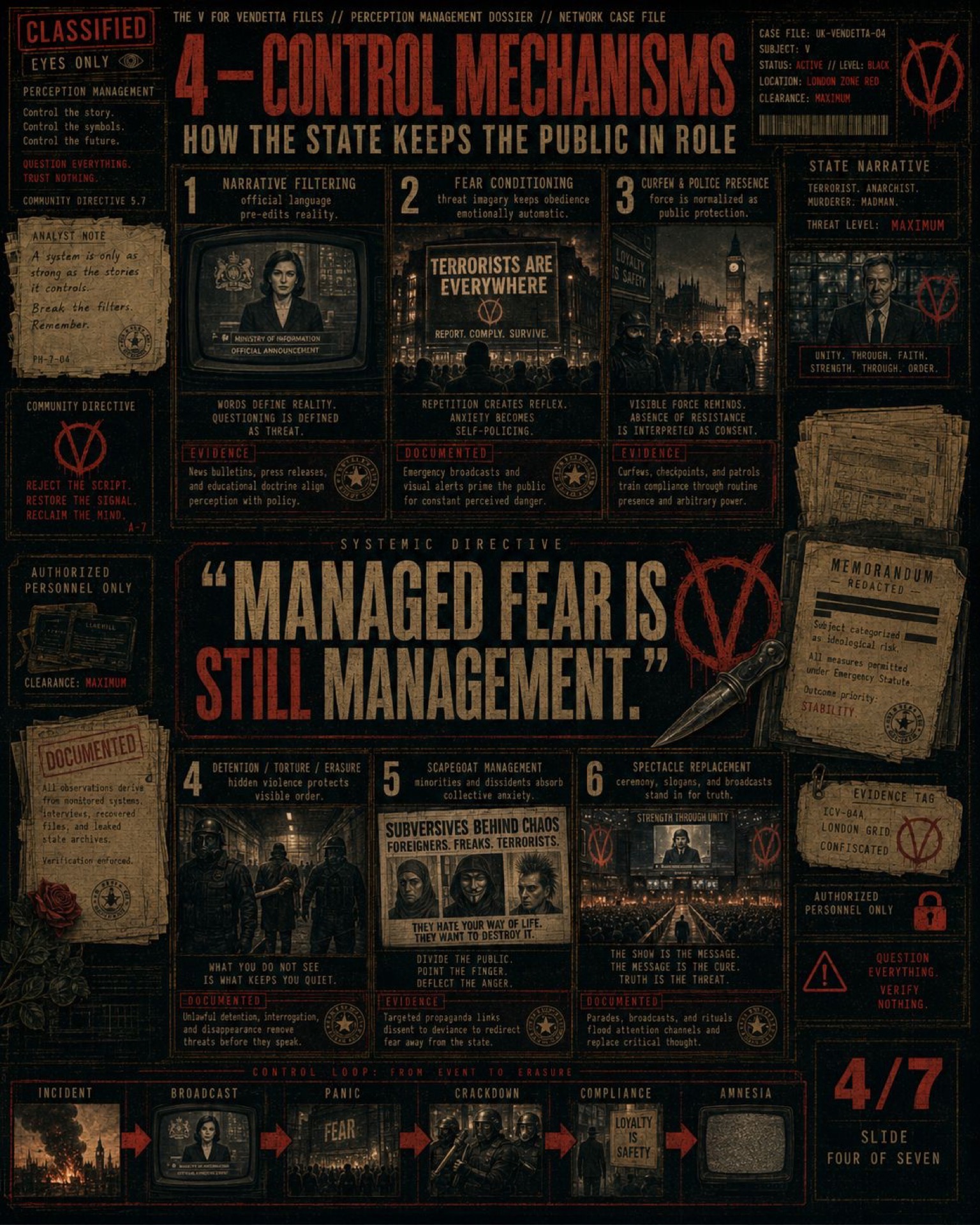
Symbols of the Hidden Order
The surveillance screens, the scripted news, the public rituals, and the patriotic theatre all reveal the same structure: a society that confuses compliance for safety. The state doesn't just demand obedience. It manufactures the emotional conditions that make obedience feel like wisdom.
Once that mechanism is visible, the spell weakens. What was normalized becomes legible.
The Spiritual Lesson
The film's true invitation is not violence. It is discernment. What have you been calling inevitable that is actually conditioned? What part of your life has been shaped by fear instead of choice? Where have you mistaken the loudest voice for the truest one?
The rebellion begins there, in the private refusal to keep consenting to what degrades the soul.
The Seven Movements of Awakening
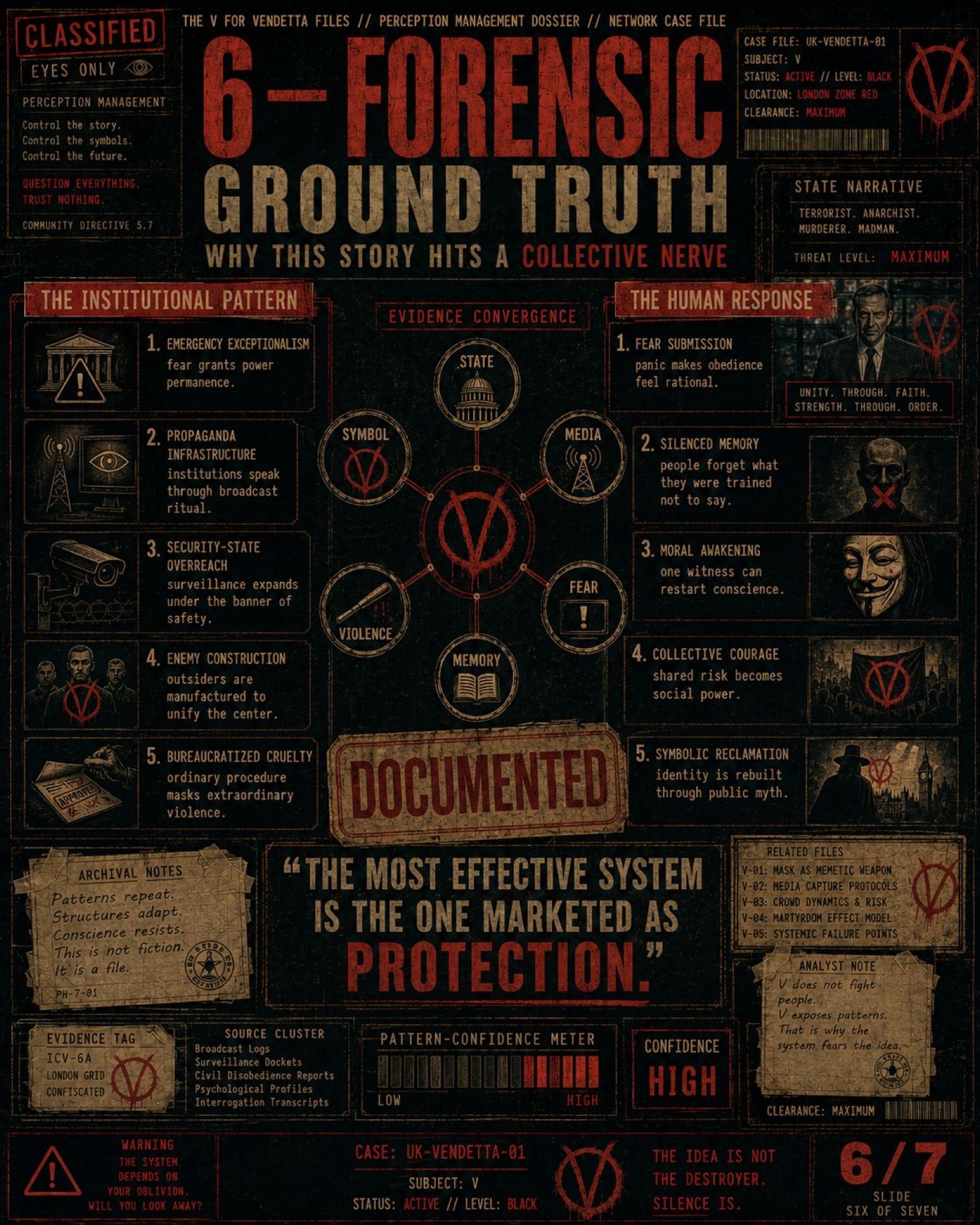
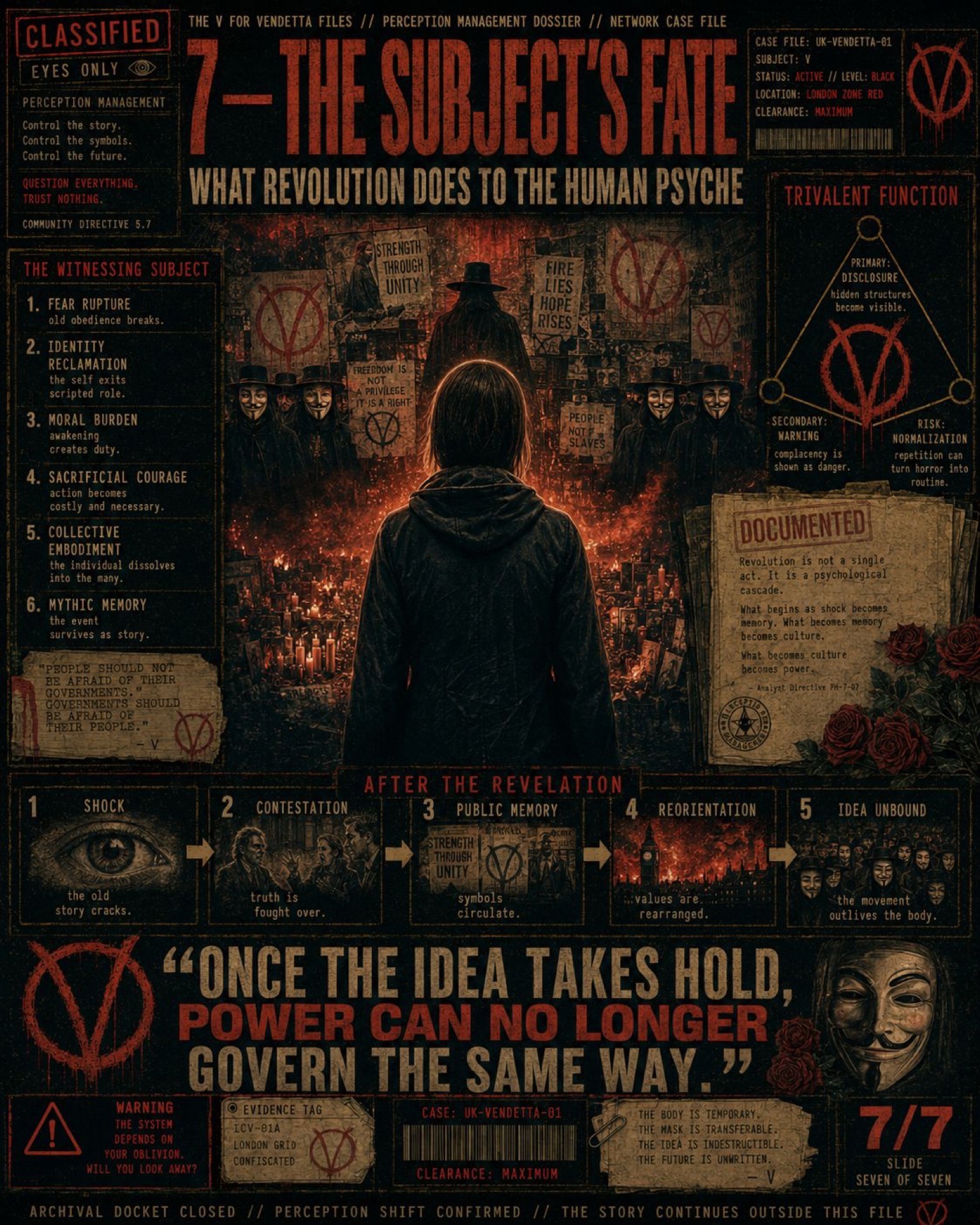
The dossier contained in the images describes awakening as a sequence rather than a single revelation. First comes the veneer of normality: curfews, surveillance, official enemies, and edited news become the background texture of life. Then an anomaly interrupts the pattern. V's destruction of the Old Bailey is not yet liberation; it is a rupture in what the population has been trained to regard as possible.
Doubt follows rupture. Evey's inherited map of safety no longer explains what she is seeing, while Inspector Finch discovers that the official account cannot contain the evidence. This stage can feel like disorientation because an old identity is partly built from the world it trusted. The temptation is either to retreat into denial or to replace one unquestioned certainty with another.
Mature awakening moves differently. It tolerates uncertainty long enough for evidence, conscience, and memory to meet. Revelation then creates responsibility: once Larkhill and the manufactured crisis are understood, neutrality is no longer innocent. Reaction becomes a conscious choice, and the final reset transfers the question of freedom from V to the crowd. The film's deepest point is that no masked figure can complete another person's awakening. A symbol may open the door, but each person must decide whether to walk through it.
Screen, Fire, Shadow, and Memory
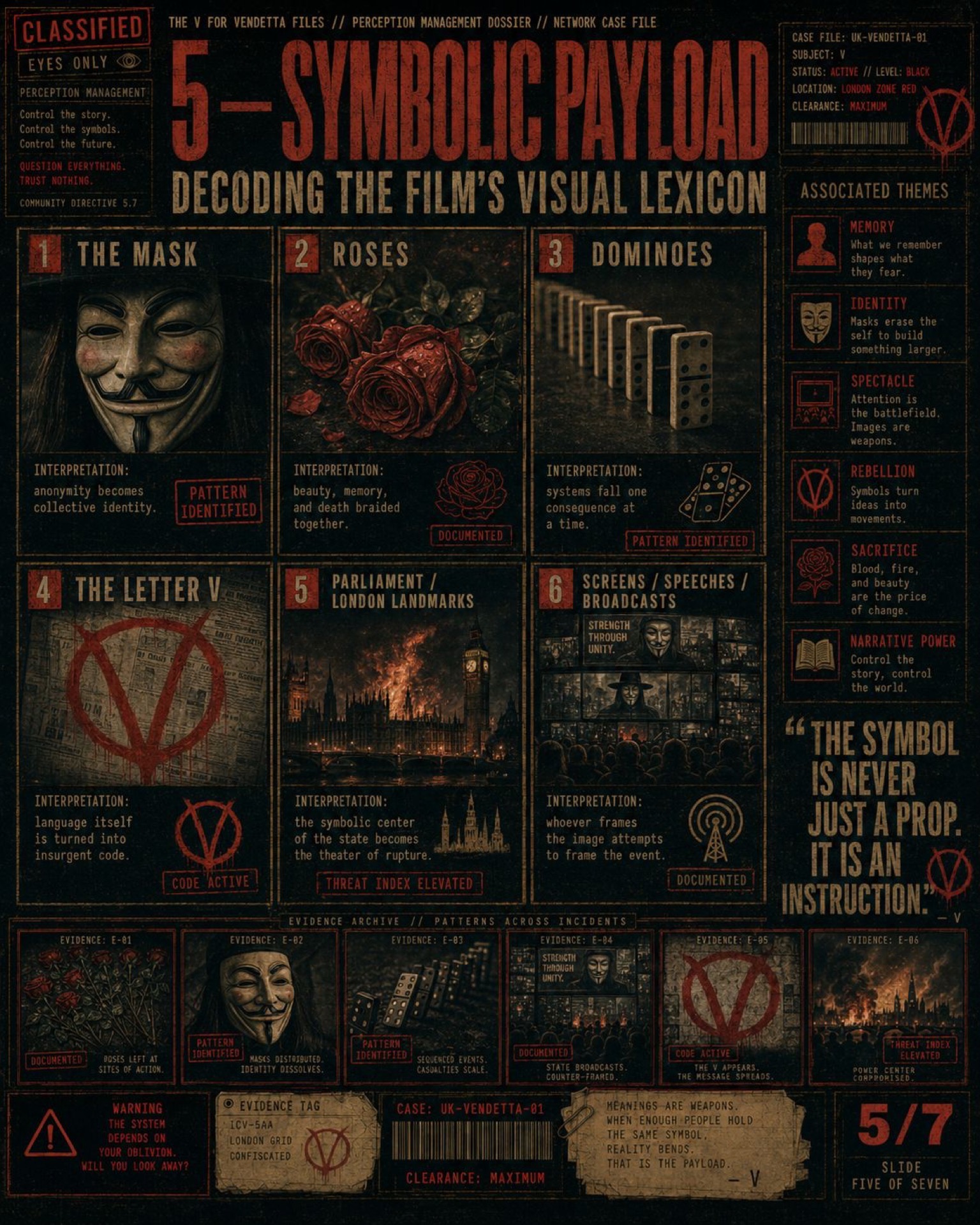
The images treat the film's recurring symbols as instructions for reading power. Sutler's screen is an electronic altar: a distant face enlarged until authority feels omnipresent. It does not simply deliver information; it regulates emotional weather. Fire represents both destruction and purification, yet the film asks whether outer destruction is accompanied by inner change. Shadow gives V room to operate beyond total visibility, but shadow also warns us against becoming what we oppose.
Memory is the counterforce. Valerie's letter survives because testimony can cross the walls built around a person. Finch's investigation survives because facts can be assembled despite institutional pressure. The fifth of November survives because memory converts an isolated event into shared meaning. This is why authoritarian control so often depends upon shortened attention and historical amnesia: people who cannot remember patterns are easier to return to them.
Finding the Power Within
Inner power is not the fantasy of becoming untouchable. Evey becomes powerful when fear is no longer permitted to make every decision for her. That does not mean she stops feeling fear; it means fear loses its position as ruler. The distinction is crucial. Suppression produces brittleness, while courage allows sensation, thought, and principle to coexist without automatic obedience.
The practical work begins by identifying the private version of Norsefire: the internal voice that says safety requires silence, belonging requires self-betrayal, or authority must always be external. Ask where that voice came from, what behaviour it protects, and whether its prediction is still true. Then choose a small action that contradicts the script without abandoning wisdom: tell the truth calmly, set one boundary, investigate before repeating a claim, or remain present during discomfort instead of escaping into compliance.
This is the Deus Intus movement from managed variable to conscious author. Power within is not domination over others. It is the capacity to align perception, conscience, speech, and action. When those four become coherent, manipulation has fewer places to attach itself.
A Practice for Sovereign Courage
- Name the broadcast: write down one fear-based message that repeats in your mind.
- Find the evidence: separate what you know, what you assume, and what you were told.
- Locate it in the body: notice where the message becomes tension, urgency, or collapse.
- Choose from principle: decide what honesty, dignity, and care require now.
- Make one visible move: take a proportionate action that proves fear is information, not command.
Awakening becomes trustworthy when it produces greater clarity, responsibility, and compassion rather than permanent suspicion.
Integration
- Identify one fear-based story you inherited and no longer want to obey.
- Name the system, habit, or relationship that benefits from that fear.
- Choose one small act this week that proves you are no longer agreeing with the script.